

SME hauliers should not wait for every part of the electric HGV transition to be solved before taking their first practical steps, according to speakers at this year’s Commercial Vehicle Show, held at the NEC Birmingham in April.
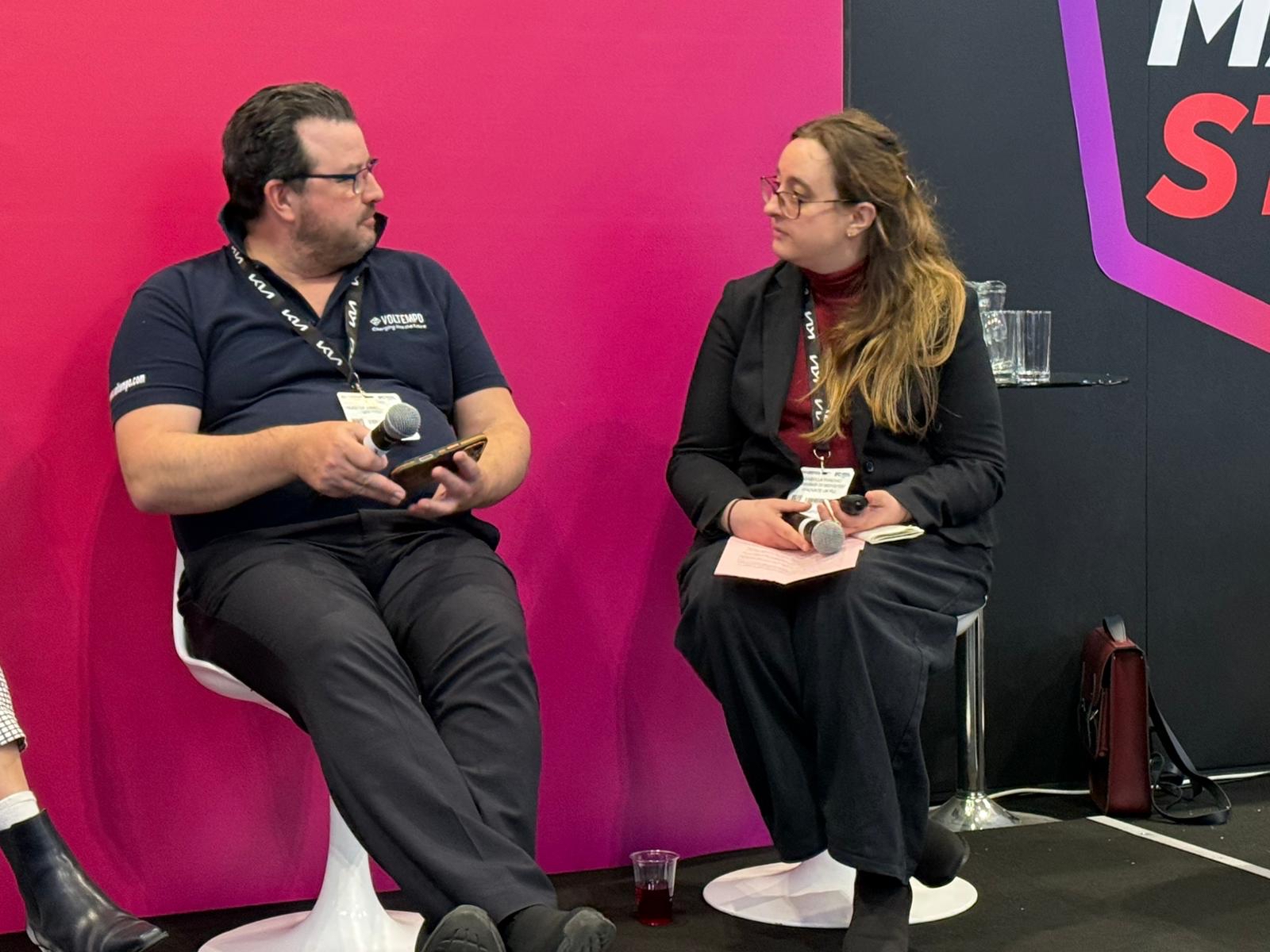
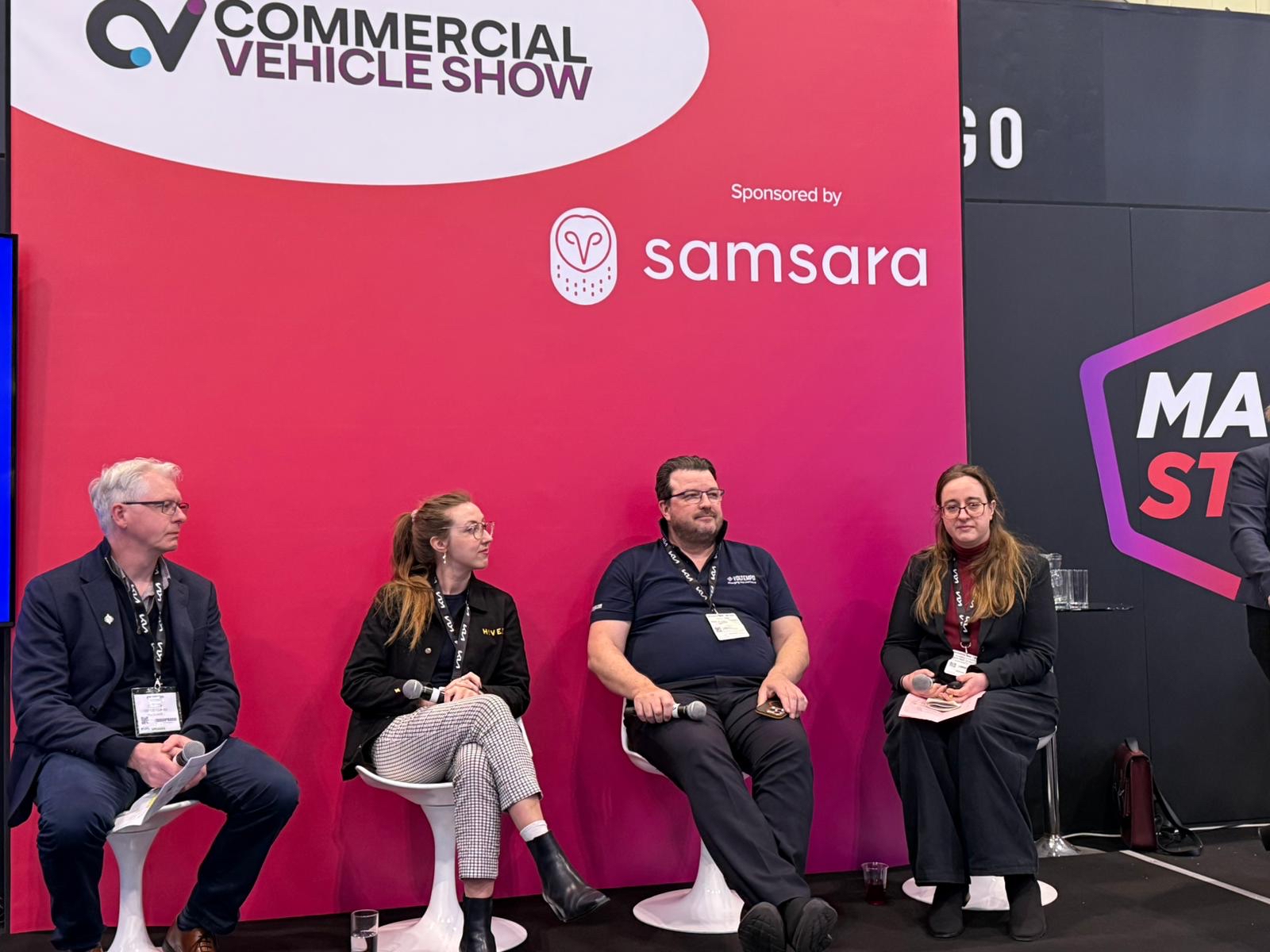
The panel discussion, Electric as the way forward for SMEs – overcoming the challenges, was chaired by Isabella Panovic, Programme Manager at Innovate UK, and featured Neil Durno, Head of Partnerships at Voltempo; Dave Rose, Founder and CEO of Voltloader; and Izabel Fuell, VP of Operations Strategy and Expansion at Hived.
The session explored how smaller operators can begin to engage with electric freight, with speakers highlighting early learning, vehicle utilisation, depot charging, infrastructure sharing and grant support as key themes.
Innovate’s Panovic opened the discussion by outlining progress through the Zero Emission HGV and Infrastructure Demonstrator (ZEHID) programme, which is testing zero-emission HGVs and the infrastructure needed to support them in real-world conditions. She said the programme already has more than 200 battery electric HGVs in operation across the UK, with around 300 expected in total, supported by more than 70 charging sites.
Building confidence through real-world experience
As lead consortium partner for eFREIGHT 2030, Voltempo is working with operators, vehicle manufacturers and infrastructure partners to demonstrate how zero-emission HGVs can be deployed in real-world freight operations. Durno said that collaboration, particularly with SME fleets, is critical to making the transition practical and scalable across the wider road freight sector.
While he acknowledged that the shift to electric HGVs will be a long-term transition, he said operators could start building valuable knowledge now rather than waiting until they are forced to act.
“This is a 20-year transition, but operators will learn far more by putting a single electric truck on the road than by waiting on the sidelines,” said Durno.
He added that the recently-announced government Depot Charging Scheme and Plug-in Truck Grant together offer an important opportunity for SMEs to reduce the risk of investing in their first electric truck and charging infrastructure.
Making electric trucks work commercially
The importance of using infrastructure effectively was a recurring theme. Durno said operators should consider how depot chargers could generate wider value when not being used by their own fleet. He pointed to work involving Welch’s Transport and Openreach, where depot sharing is helping move vehicles away from more expensive public charging and into lower-cost, more controlled charging environments.
He also highlighted the value of data from eFREIGHT 2030 and the wider ZEHID programme in helping operators understand which use cases are best suited to electric trucks.
Meanwhile, Rose said Voltloader’s experience shows electric HGVs are already capable of demanding work. The business has been running articulated electric trucks for two and a half years, with some vehicles covering up to 300 miles a day using a midday charge.
“The technology is there. The technology works,” said Rose.
He said grants currently available for trucks and charging infrastructure give SMEs a strong opportunity to start testing where electric vehicles could fit, build operational knowledge and differentiate themselves with customers.
Operator experience points to practical first steps
Bringing another operator perspective to the discussion, Fuell said Hived’s experience showed how smaller businesses can use their agility to test new approaches and learn quickly. The company, which began as a zero-emission parcel delivery business, has since expanded into HGV operations and haulage, using its own routes and charging infrastructure to explore different commercial models.
She said SMEs do not need to approach electrification as an immediate full-fleet transition.
“It’s not hard to get started,” she said, adding that one truck on the road can give operators the data and confidence they need for future decisions.
The panel also discussed driver benefits, including quieter operation, smoother acceleration and reduced stress. Rose said Voltloader had seen strong driver feedback from electric HGV operations, while Durno said electric trucks could help improve the working environment for drivers and air quality in the communities where freight vehicles operate.
As the discussion made clear, the question for SMEs is no longer simply whether electric HGVs can work, but where they can work first, how infrastructure can be shared, and how operators can start building the knowledge they will need for the years ahead.