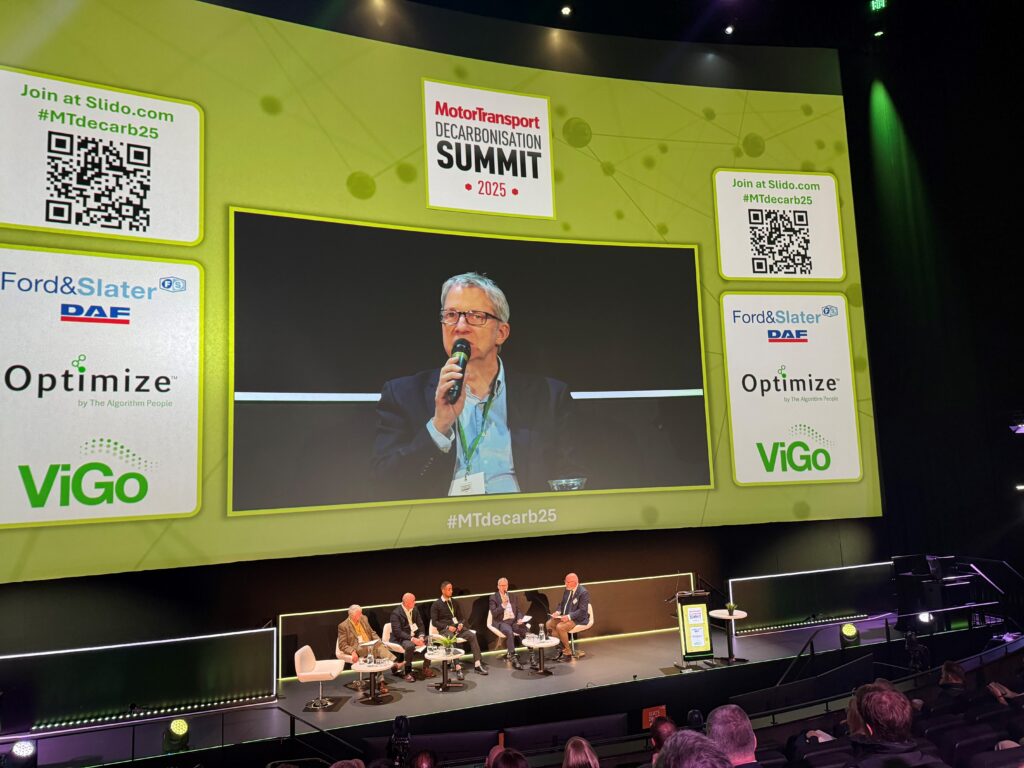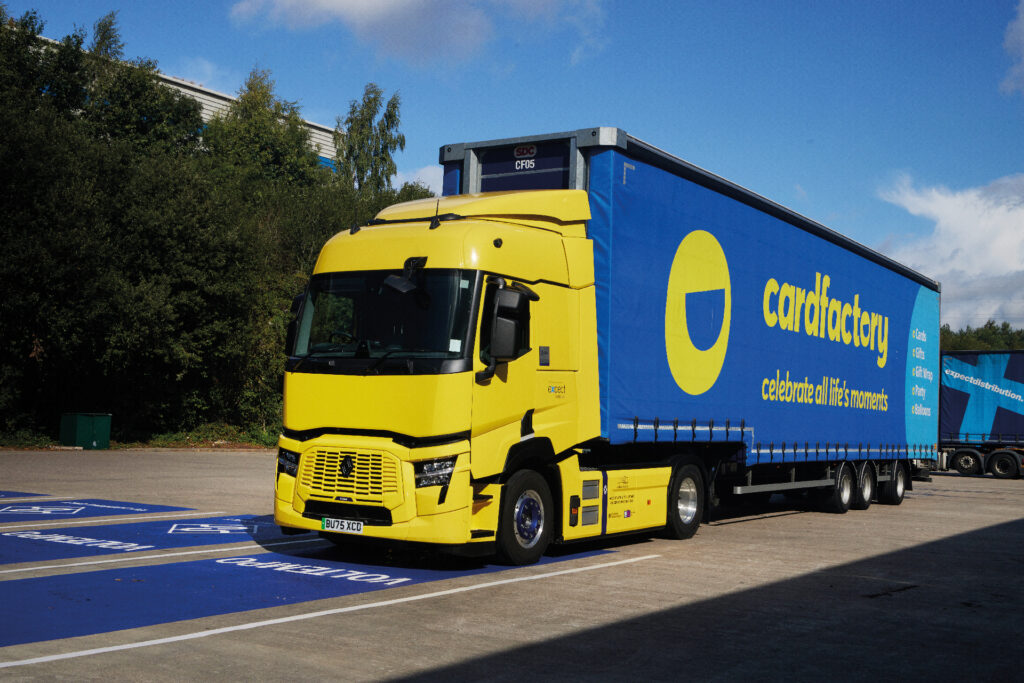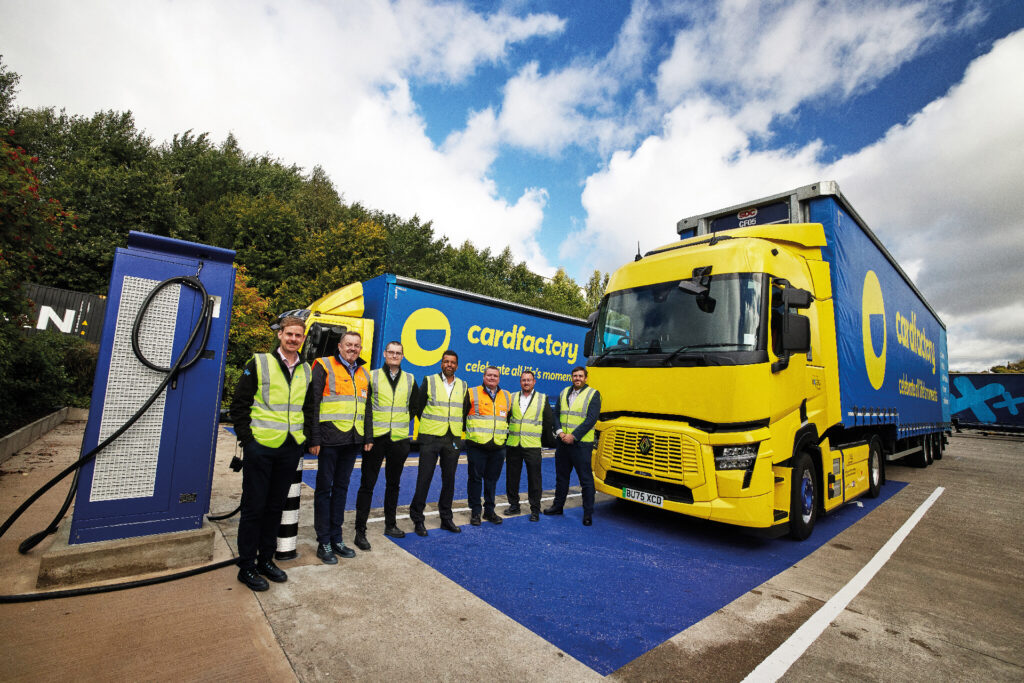

Several eFREIGHT 2030 members championed electrification at the 2025 Motor Transport Decarbonisation Summit in September. Hosted at Tyseley Energy Park, the event gave attendees the opportunity to hear from DAF, Voltempo and Berkeley Coachworks amongst others. Unlike typical conference formats, workshops across the afternoon focused on a hands-on approach to decarbonisation solutions, with active demonstrations and tours of the facilities at the energy park.
Voltempo
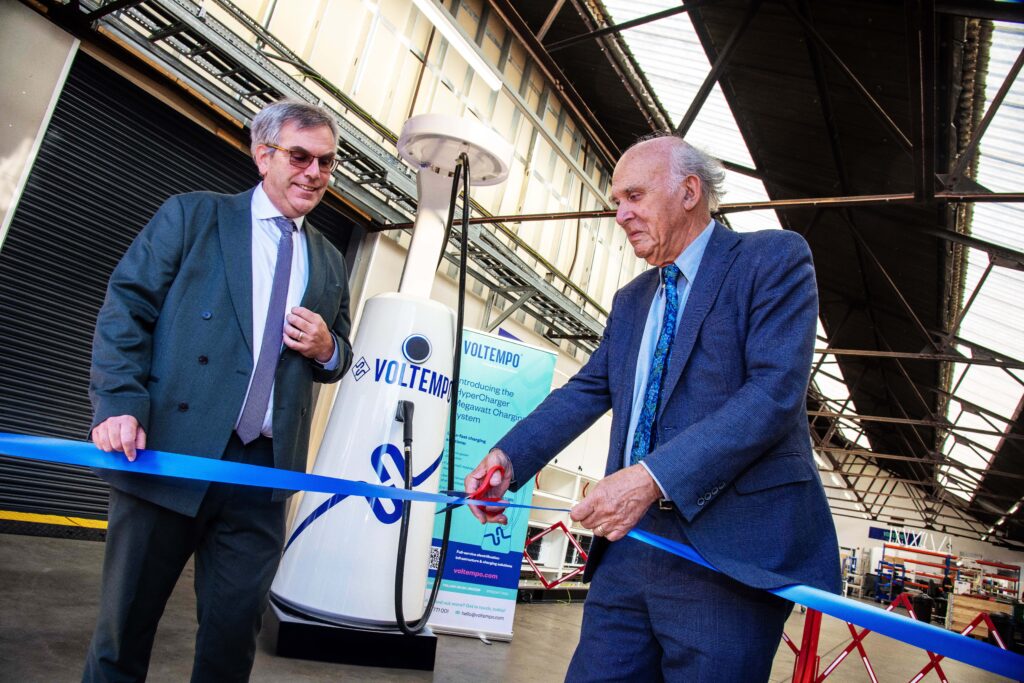
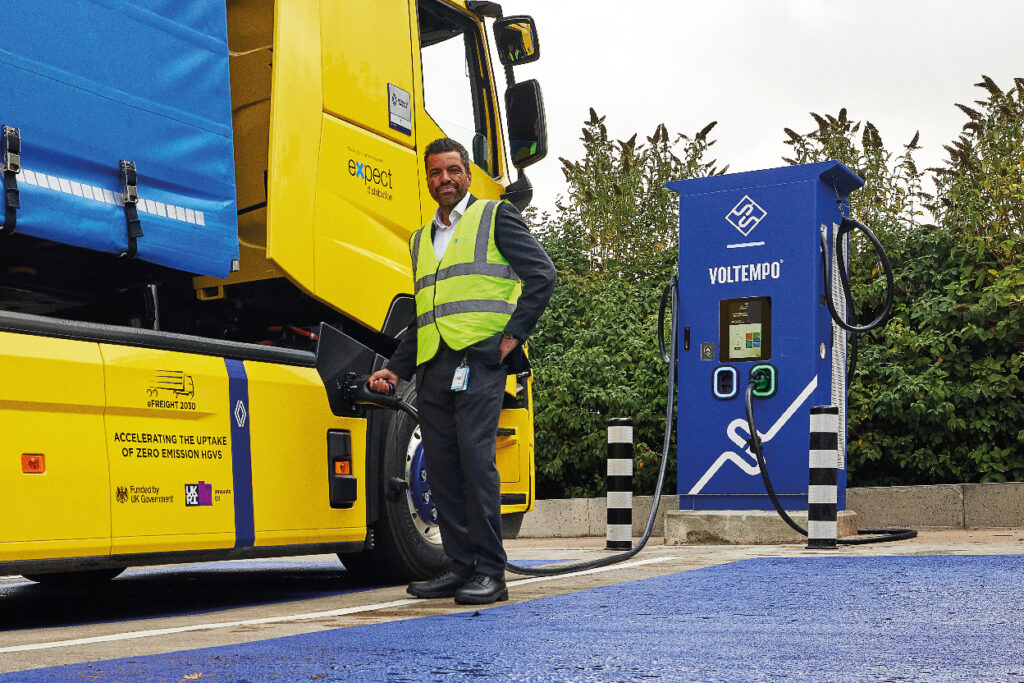
It was an historic day for the consortium leader Voltempo as Sir Vince Cable cut the ribbon on the company’s facility where it has now begun manufacturing HyperChargers. While other talks at the summit covered alternative fuels such as HVO, hydrogen, CNG and LNG, Voltempo highlighted how its HyperCharger is a breakthrough technology for electric trucks.
Designed specifically for trucks, the HyperCharger is a plug-and-charge solution without screens or an interface. Drivers just plug the truck in and Voltempo’s software can identify the vehicle. Coloured lighting on the charger indicates charge status, making the system easy to understand.
The charging equipment is accompanied by a slimline unit which houses the brains of the system. Now manufacturing has officially commenced, the team plans to build an additional 26 systems this year. Following Tesla’s example, Voltempo wants to install charging infrastructure in strategic locations in preparation for wider eHGV adoption.
Michael Boxwell, CEO of Voltempo explained his vision for the regulatory landscape needed to support freight decarbonisation. After the depot charging scheme concludes, Boxwell expects more government support for infrastructure installations. He also expressed the need for an industry-wide long term decarbonisation plan which can be presented to the government to guide legislative changes required to execute the plan.
With a clear roadmap from industry, Boxwell believes this will allow infrastructure providers to invest in charging installations with the confidence in how it will be used. He argued this will give the industry leverage to ensure it gets priority grid access to electrify fleets.
Although the initial period to get involved with eFREIGHT 2030 has passed, Boxwell reminded attendees that the consortium has launched an associate membership scheme to allow other operators to benefit from the programme.
Berkeley Coachworks
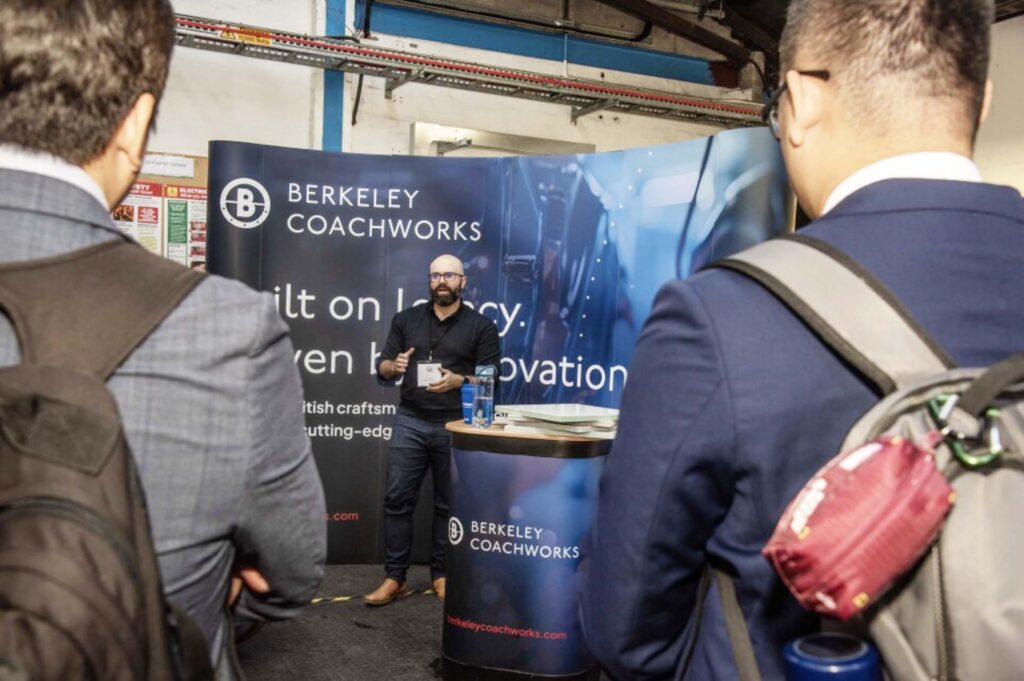
Attendees were also given an insight into Berkeley Coachworks’ novel approach to electrification. The team explained that trailer technology has remained largely unchanged since the 1950s. Instead of continuing to use trailers as passive assets, Berkeley is developing an active trailer solution which can act as a range extender for eHGVs.
The goal is to mount batteries on the trailer with enough capacity to increase the truck’s range by at least 50% in 45 minutes. This would require approximately 1.5 tonnes of battery weight. As payload restrictions are often cited as key barriers to eHGV adoption, just adding batteries to trailers would be counterproductive.
Instead, Berkeley is aiming to take 1.5 tonnes off the weight of a standard trailer to maintain equivalent payload capacity. Since they have a fairly basic design to begin with, alternative materials are seen as the best way to lightweight trailers. The team brought a number of examples with them including a comparison between composite and steel wheels. A standard steel truck wheel weighs around 44kg, Berkeley’s composite solution cuts that to 16kg.
Elsewhere on the vehicle, lightweight recyclable trailer panels can help to save around 500kg per boxside. Berkeley recently acquired a Northern Irish manufacturer that specialises in these panels, bringing its manufacturing capabilities in house.
While composite materials can offer significant weight savings, these solutions can be costly and energy intensive. Rather than use carbon fibre, Pembrokeshire wool from local farmers near Berkeley’s headquarters in South Wales is being used with bioresins. Due to regional conditions, wool from the area is typically unsuitable for clothing, making it the ideal sustainable solution for composites since it would otherwise go to waste.
To reach its target weight reduction, Berkeley intends to tackle the chassis next. However, the company is mindful of creating lightweight components that can be retrofitted to existing trailers. Over the next six months, the plan is to start looking at lightweighting other types of trailers including double deck units. A motorised hands free side slide system for curtainsiders is also in development.
Early ambitions for the trailer electrification project will see the trailer used as a mobile recharging station. In future though, trailers could be fitted with e-axles to not only recover energy during braking but to add driven axles which can help to improve fuel efficiency, even with a diesel tractor unit. Berkeley is keen to fully explore the possibilities of reframing trailers as active assets.
DAF Trucks
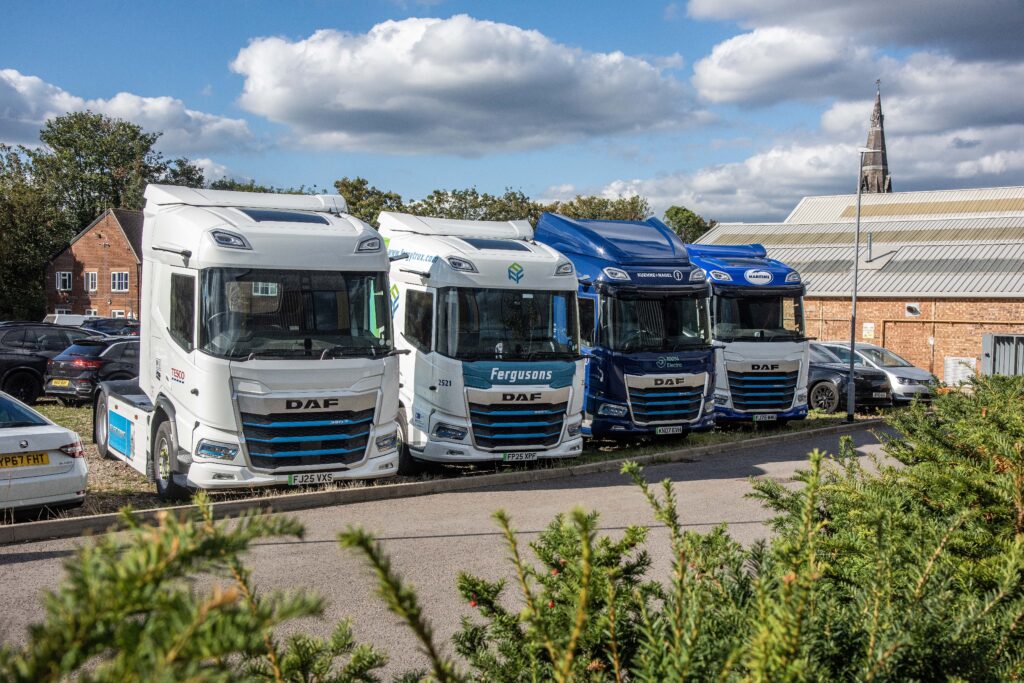
In partnership with the dealer Ford & Slater, DAF showcased a range of eHGVs including units supplied to consortium members Tarmac, Maritime Transport, Kuehne+Nagel and Wincanton. While the manufacturer is trialling other alternative fuel options across the PACCAR group, its primary focus is electrification.
Unlike other truck makers that favour nickel manganese cobalt (NMC) battery technology, DAF uses lithium ferro phosphate (LFP) chemistry for its longevity and suitability for road transport applications. As well as highlighting the charging options offered through PACCAR Power Solutions, the presentation emphasised the importance of driver training to get the most out of eHGVs.
Alongside trucks funded by the ZEHID programme, DAF is anticipating more than 100 of its electric trucks will be deployed with UK customers by the end of 2025. The eHGVs on display at Tynseley Energy Park showcased the variety of applications existing technology can satisfy.
EFREIGHT 2030 Steering Group Member, Andrew Scott, Positive Connections UK and TVS, took part in the “Feeding the Consultation” panel discussion, which focused on the Government’s forthcoming consultation on decarbonisation and electrification of the road freight sector. The session explored what industry stakeholders want to see reflected in the consultation, including priorities such as vehicle weight and dimension changes to support battery-electric operations, residual value guarantees, and clarity on ICE phase-out timelines. Andrew joined fellow panellists Lamech Solomon (Logistics UK), Colin Matthews (JouleVert), and Matthew Deer (Swain Group) to discuss how industry and Government can collaborate to shape a practical, commercially viable pathway to zero-emission road freight.