Voltempo powers UK’s first megawatt-scale eHGV charging hub at Kuehne+Nagel East Midlands Gateway as part of eFREIGHT 2030

Voltempo powers UK’s first megawatt-scale eHGV charging hub at Kuehne+Nagel East Midlands Gateway as part of eFREIGHT 2030

First of 25 planned megawatt-scale charging hubs goes live, underpinned by British designed Voltempo HyperCharger technology, supporting Kuehne+Nagel’s electric fleet 

The eFREIGHT 2030 consortium has reached a major milestone with the official opening of the first megawatt-scale electric heavy goods vehicle (eHGV) charging site, using Voltempo’s HyperCharger technology at East Midlands Gateway to support Kuehne+Nagel’s UK road operations.  

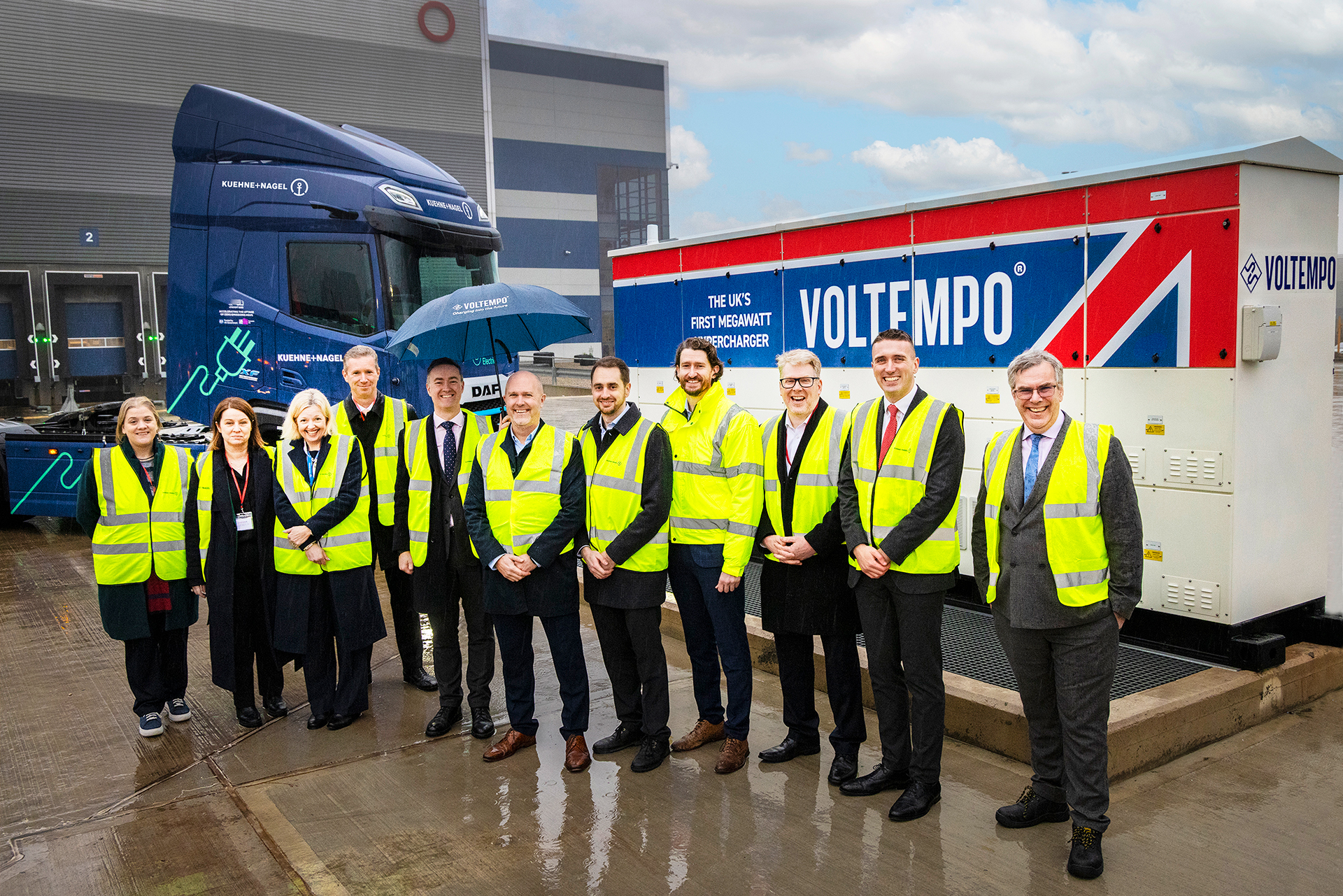
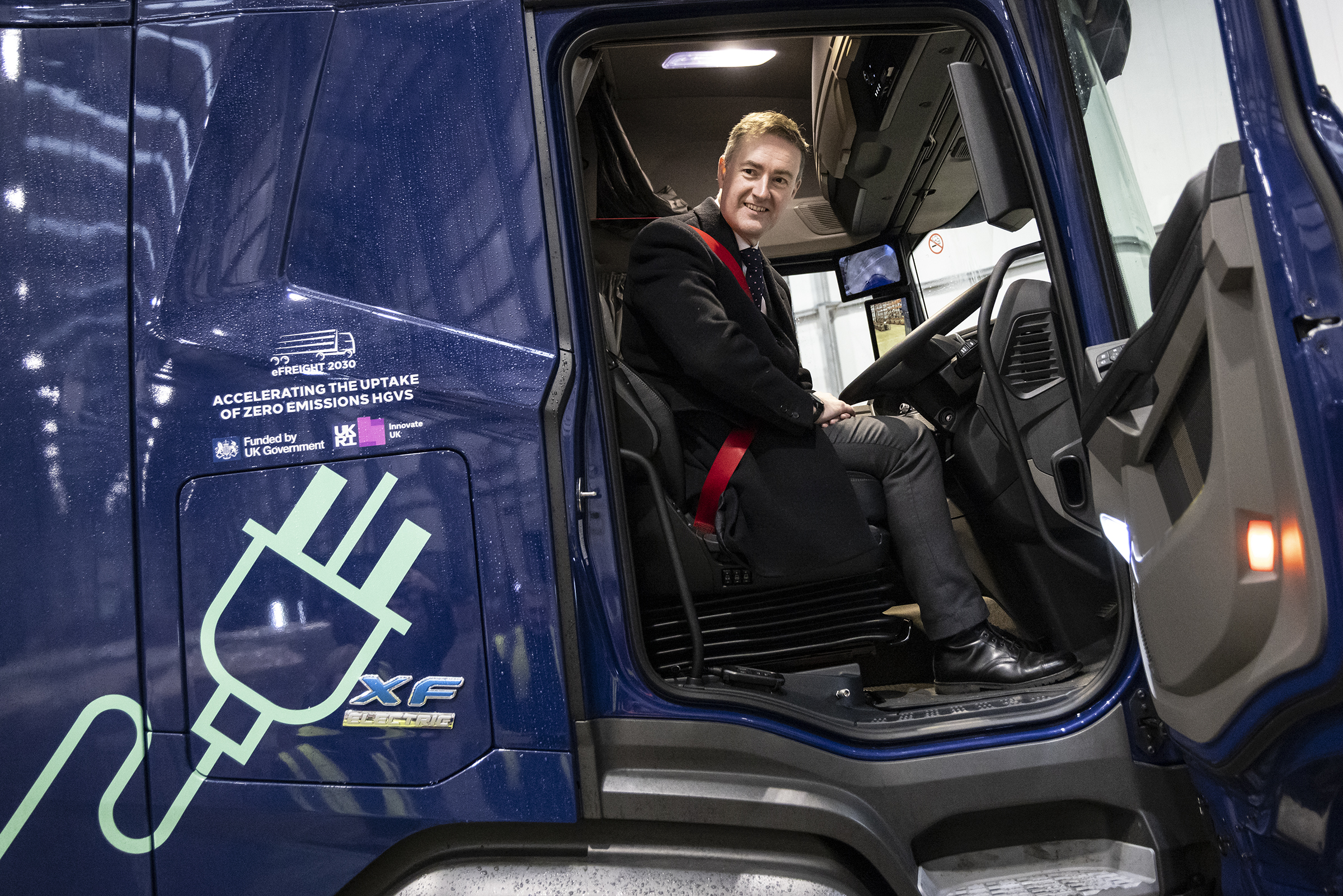
Formally opened on 15 January with Chris McDonald, Minister for Industry in the Department for Energy Security and Net Zero (DESNZ) and the Department for Business and Trade (DBT) in attendance, the Kuehne+Nagel hub is the first MCS-ready (Megawatt Charging System) charger to be deployed in the UK. 

(l) to (r) Kate Broome, Sustainability and Social Impact Director, Kuehne+Nagel; Amanda Hack MP, Eleanor Edmonds, Director, Road Logistics, Kuehne+Nagel; Ben Fletcher, Chief Executive, Logistics UK, Chris McDonald, Minister for Industry in the Department for Energy Security and Net Zero (DESNZ) and the Department for Business and Trade (DBT); Simon Smith, CEO, Voltempo; Alistair Barnes, Senior Programme Manager, Innovate UK: John Fox, Chief Operating Officer, Voltempo; Paul Jordan, Chief Commercial Officer, Voltempo; Louis Jones, EV & Connected Services Director, DAF Trucks UK; Michael Boxwell, Corporate Development Officer, Voltempo.

Designed and implemented by Voltempo, lead partner of the eFREIGHT 2030 consortium and the programme’s charging infrastructure provider, the new charging hub at East Midlands Gateway is powered by Voltempo’s HyperCharger system, capable of delivering charge rates up to one megawatt – enough to charge future eHGVs in less than 30 minutes. 

It is the first of Voltempo’s Megawatt-scale HyperChargers to be deployed under the planned national rollout of 35 depot charging hubs through eFREIGHT 2030, part of UK government’s £200 million Zero Emission HGV and Infrastructure Demonstrator (ZEHID) Programme, funded by the Department for Transport and delivered in partnership with Innovate UK. 

“This first deployment of Voltempo’s HyperCharger at Kuehne+Nagel’s depot is a significant milestone for zero emission freight,” said Simon Smith, CEO, Voltempo. “As lead partner and charging infrastructure provider for eFREIGHT 2030, our focus has been on delivering infrastructure that works for real-world freight operations today, while being ready for the next generation of high-power electric and autonomous HGVs tomorrow.” 

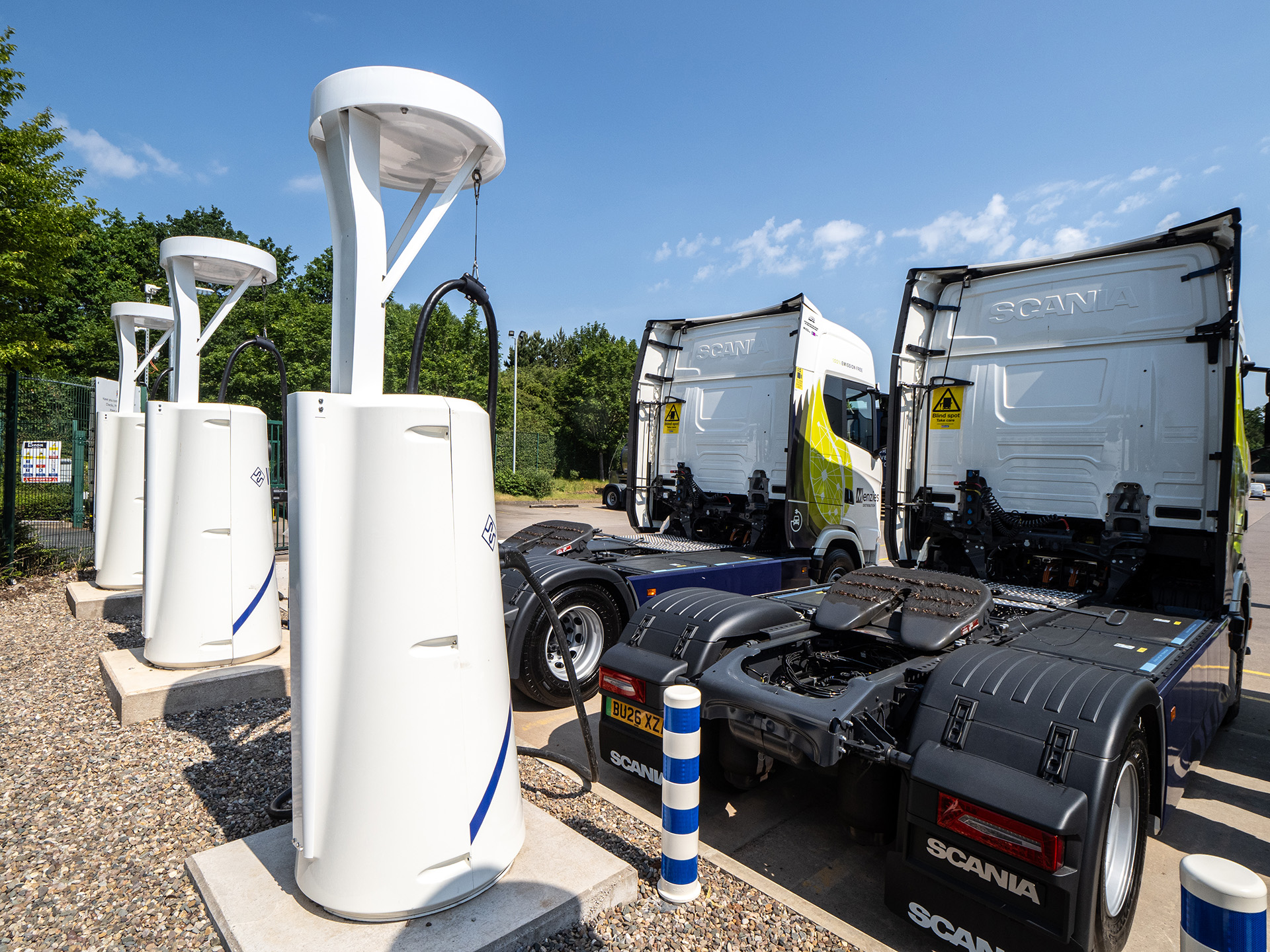
The Kuehne+Nagel site features six DC charging bays powered by Voltempo’s HyperCharger infrastructure. At the heart of the system is a single megawatt-scale HyperCharger pod, which intelligently distributes power across a network of chargepoints with one positioned at each bay, enabling flexible, high-power charging to support future freight operations.  

Strategic location for UK freight 

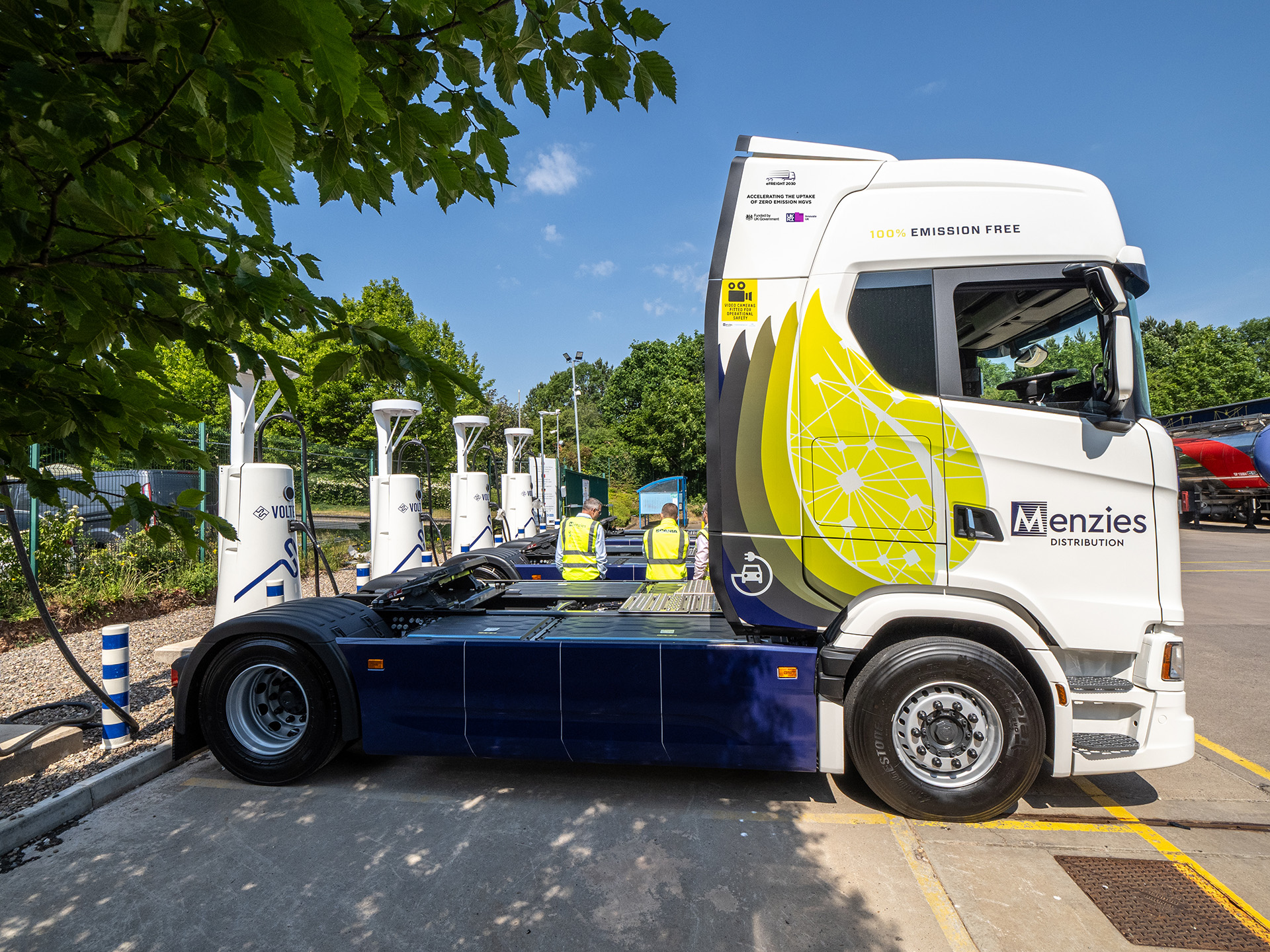
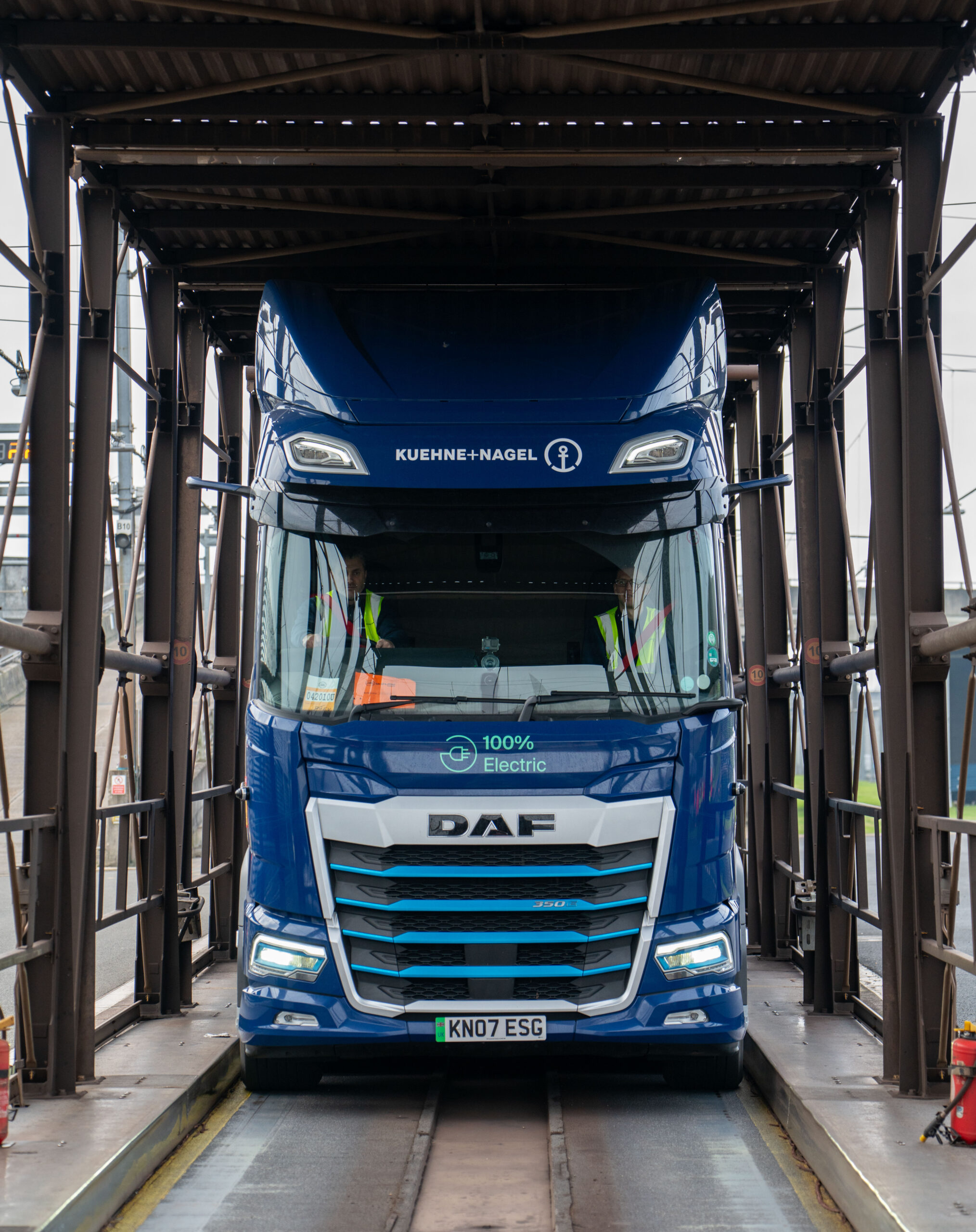
The East Midlands Gateway charging infrastructure will support Kuehne+Nagel’s continued investment in decarbonising its fleet, initially serving an electric fleet of twelve eHGVs which are part of the ZEHID project, including both DAF XF Electric and Renault Trucks E-Tech Ts as part of eFREIGHT 2030 operating across regional, national and international routes. Each truck is providing valuable real-world performance and efficiency data to support the eFREIGHT 2030 programme, including analysis of energy use, range, charging cycles and total cost of operation. 

Kuehne+Nagel’s 200,000 sq ft East Midlands Gateway facility serves as the company’s UK key operations hub for road logistics activities, featuring 67 loading docks and handling a wide range of goods, including pharmaceuticals, High-Tech and groupage services. Its prime location adjacent to the M1 and East Midlands Airport makes it one of the UK’s most connected logistics hubs, and an ideal base for demonstrating the viability of electric HGV operations. 

Kate Broome, Sustainability and Social Impact Director at Kuehne+Nagel, said: “As part of eFREIGHT 2030, we’re proud to be working with partners like Voltempo and their innovative technology, alongside vehicle manufacturers DAF and Renault Trucks, to open the first charging hub at our site – a real milestone made possible through collaboration across industry. Located at the heart of our UK road logistics operations, the combination of the HyperCharger and our new electric fleet enables us to deliver more sustainable logistics for our customers at real operational scale.” 

Kuehne+Nagel’s participation in eFREIGHT 2030 builds on its Vision 2030 commitment to be the most trusted supply chain partner supporting a sustainable future, with validated science-based emissions targets and a track record of pioneering electric road freight. Its UK electric HGV programme has already surpassed 150,000 zero-emission miles, and the company is proud to hold Bronze Carbon Literate Organisation status, having created the industry’s first Carbon Literacy© course focused on logistics. 

Chris McDonald, Minister for Industry in the Department for Energy Security and Net Zero (DESNZ) and the Department for Business and Trade (DBT) attends the formal opening of the UK’s first megawatt-scale eHGV charging hub at Kuehne+Nagel East Midlands Gateway as part of eFREIGHT 2030

British-designed infrastructure purpose-built for trucks 

The Voltempo HyperCharger is a British-designed and manufactured charging system, developed specifically for heavy-duty freight applications. The technology has recently achieved Made in Britain membership eligibility, recognising that the product is substantially designed, engineered and manufactured in the UK, with all labour involved in producing the finished system based in Tyseley, East Birmingham. 

Each HyperCharger can deliver up to one megawatt of dynamically distributed power, supplying up to six vehicles simultaneously. The system can be scaled across multiple chargepoints to support larger fleets and evolving depot requirements. 

Designed with sustainability and simplicity in mind, the HyperCharger functions efficiently and flexibly due to the configuration and control of the power modules allowing multiple vehicles to be charged to suit their range requirements and time of despatch, helping operators minimise vehicle charging time as well as lower the fleet’s carbon emissions. The chargers are OCPP 2.0+ compliant and Plug and Charge capable. 

The Voltempo system simplifies the driver’s experience – with no payment terminal required, the system authenticates the trucks from the operator’s fleet list and manages all the charging transactions seamlessly in the background. 

Alistair Barnes, Senior Programme Manager at Innovate UK said: “We are delighted to support the launch of this pioneering charging hub at Kuehne+Nagel’s East Midlands Gateway depot. Voltempo’s state-of-the-art HyperCharger is enabling eFREIGHT 2030 to meet the sustainable haulage demands of today and tomorrow. The ZEHID programme, funded by the UK Government and delivered in partnership with Innovate UK, is providing strategic insights into the future of road transport. Powerful partnerships like this are accelerating the transition to zero-emission freight and driving the UK’s clean growth ambitions forward.” 

Logistics UK Chief Executive Ben Fletcher said:

 “It was great to see firsthand the opening of the UK’s first megawatt-scale eHGV charging hub, and it is a giant step forward in the transformation of our industry. Being able to charge future eHGVs in less than 30 minutes will not only unlock more opportunities for the sector but it will also enhance confidence and reduce costs. Commercial and operational viability will always be the main driver for logistics operators, and this will help them deliver efficiencies and best value to their customers.

“Lack of charging infrastructure is one of the main barriers to fleet electrification, and the opening of the UK’s first megawatt-scale eHGV charging hub shows exactly how to make electrification work for real-world freight operations. Government and regulators should now feel confident in the technology and start to place logistics at the forefront of grid reform and planning so similar charging infrastructure can be installed across the country quickly. This will not only reduce operating costs but helps bring down the cost of living for the Great British public too.”


eFreight 2030 on the Department for Transport’s freight decarbonisation announcements

Two announcements from the Department of Transport have put freight decarbonisation in the spotlight.

The extension of the Plug-in Truck Grant is a welcome step. The additional £18 million of funding, offering up to £120,000 per electric truck and running through to March 2026, helps reduce vehicle cost and gives more operators the confidence to start investing in electric HGVs.

Commenting on the announcement, Michael Boxwell from Voltempo, which leads eFREIGHT 2030, said: “The Department for Transport’s ongoing commitment to net zero freight is hugely welcome and this new announcement can benefit fleet operators and their customers as they move towards zero-emission road freight. eFREIGHT 2030 is already delivering on these ambitions with new charging hubs and fleet deployments across the UK.”

Alongside this, the Department for Transport has launched a consultation on the future regulatory framework for decarbonising HGVs, moving the focus beyond short-term support to the longer-term direction of travel.

Across eFREIGHT 2030 and ZEHID, fleet operators are already introducing electric trucks into live operations and building practical experience around charging, routes, utilisation and costs. That activity brings real-world operational insight into the wider discussion as it develops.

It’s the gap between regulatory ambition and operational delivery where industry input will matter most.  Have your say here.

eFreight 2030 at the 12th International Sustainable Road Freight Workshop

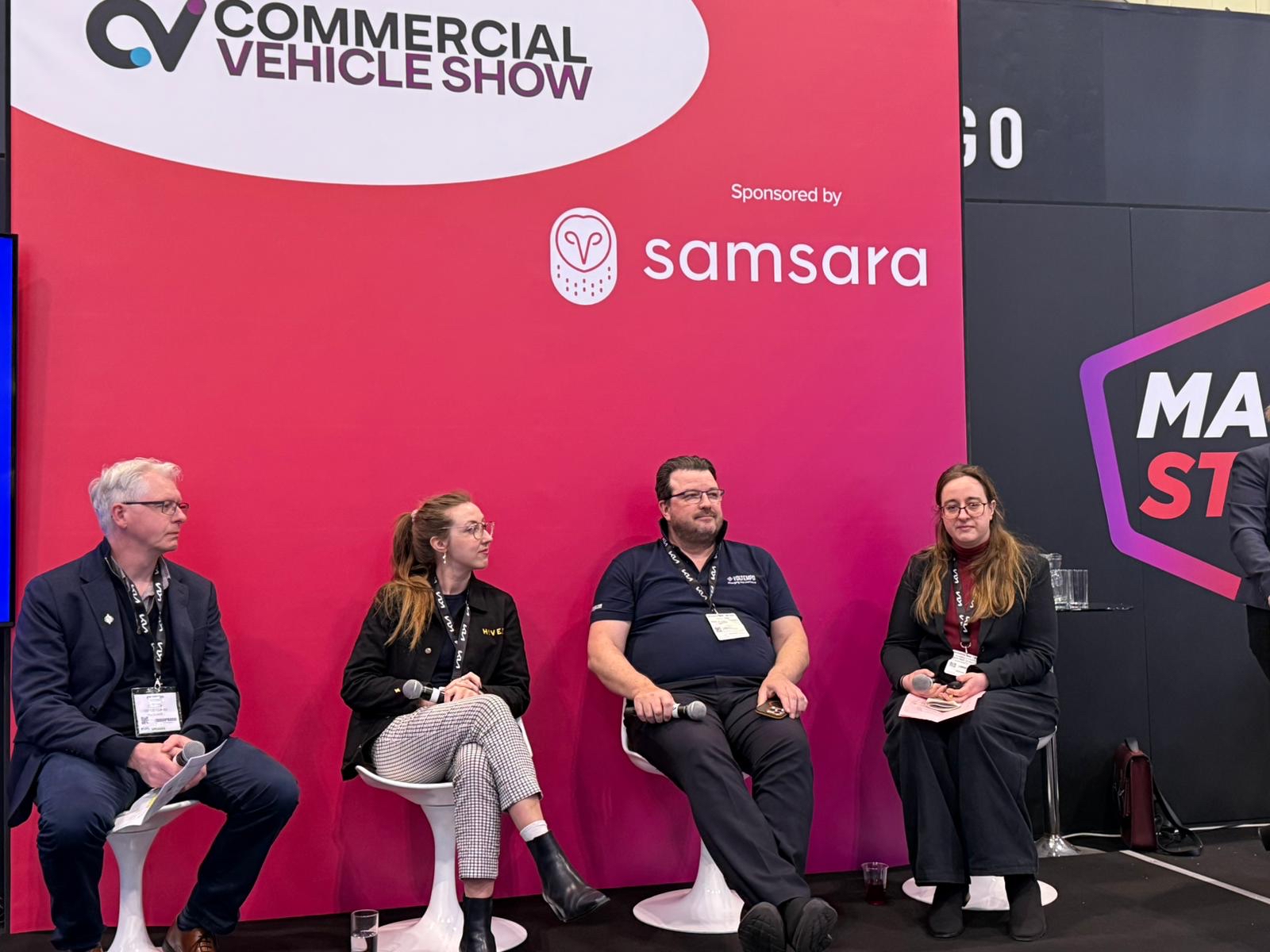
The 12th International Sustainable Road Freight Workshop brought together academics and transport operators to discuss insights on the decarbonisation of freight. From projects in the UK and Europe to research in China, India and the US, speakers provided a range of different perspectives on the transition.

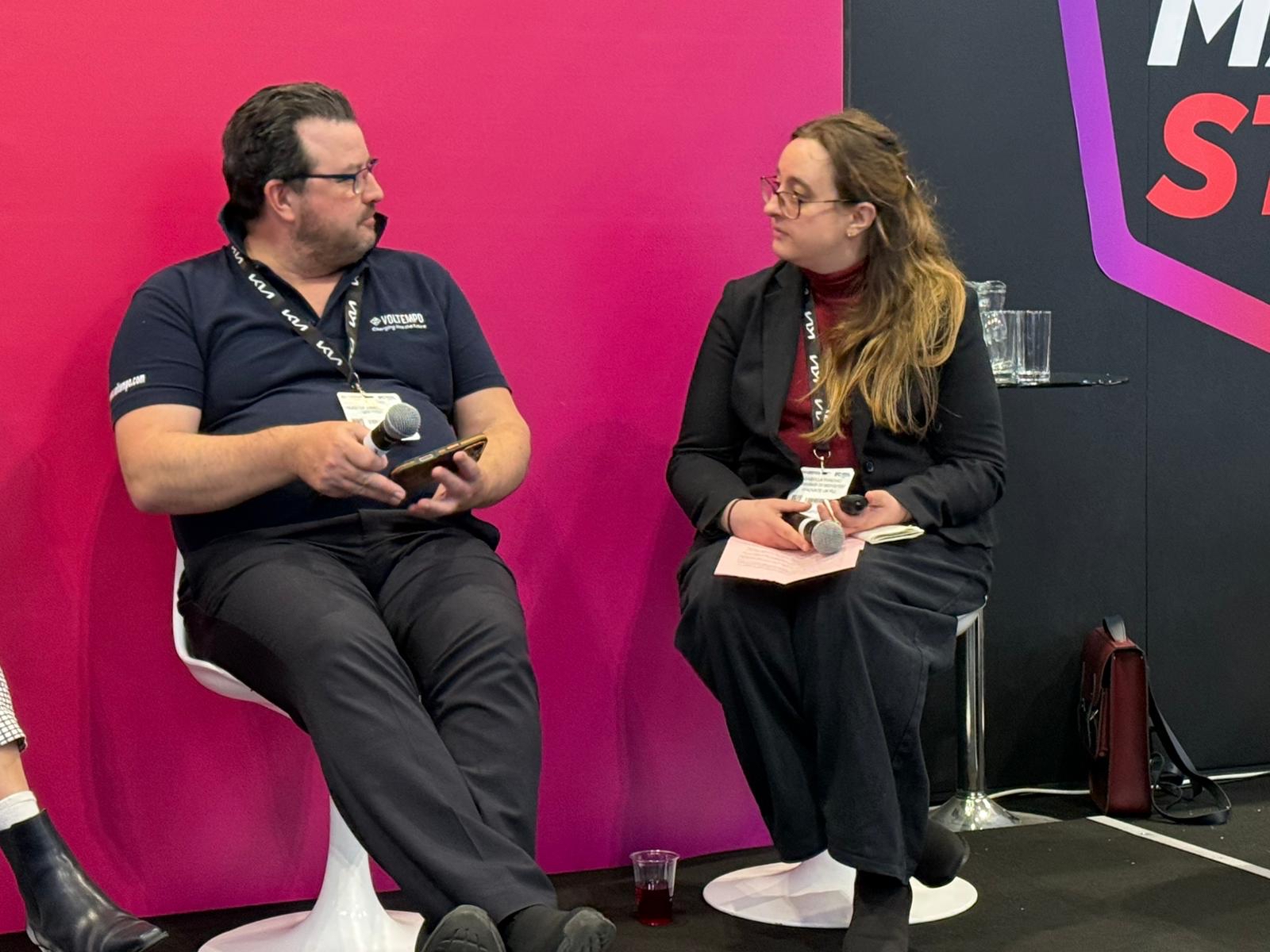
Trinity Francis

Hosted at the University of Cambridge, the first day of the two day conference saw representatives from ZEHID and other UK-based projects share updates. Lowri Williams, Transport Systems Practice Manager, at Energy Systems Catapult presented on behalf of the eFREIGHT 2030 consortium. 

After explaining the research aims of eFREIGHT 2030, Williams delved into outputs of the project. “We are releasing a tool which we’re calling a financial assessment tool, rather than a TCO calculator, because it goes beyond the vehicles and charging infrastructure.

“It looks at things like project costs behind the meter, storage and generation and how those can impact and influence the TCO of the vehicles to bring that broader cost picture into view. As well as looking at different finance mechanisms and payback periods.” 

Using ESME Road Freight national modelling, Williams explained how the research explored what the eHGV market could look like between now and 2050 based on different incentives. 

“There’s a lot of evidence that for the smaller vehicles, TCO can stack up much more quickly than it can for the larger, most emitting vehicles. We tried a few different things, one of which was targeted incentives, so as TCO parity was achieved for smaller vehicles, shifting the money that would be spent on those incentives to the larger vehicles. We saw that really pulled forward uptake of the zero emission vehicles in the heaviest segment,” Williams said. 

Modelling showed greater incentives for long haul trucks could accelerate eHGV uptake by around five years. The research also suggested that HGVs travelling more than 400km on a daily basis will likely see eHGV uptake peak between 2040 and 2045 compared to lower mileage trucks which are expected to experience large adoption from 2030 to 2035. 

Williams continued, “A similar thing was seen when we looked at introducing a carbon tax on fossil fuels used in HGVs. This was set up in a way that for a sector that bought the most fossil fuels, they got back the most incentive. 

“The way that played out is for those larger vehicles that do the most miles, they got a bigger incentive when it came to the eHGVs, and that drove uptake earlier. I believe that was the only scenario where the seventh carbon budget was able to be reached.” 

Alongside detailed TCO modelling, the project has also conducted in-depth infrastructure analysis for eHGV requirements. “We did case studies on three specific locations that are in the eFREIGHT 2030 project and we were looking at how things like smart charging, on site solar generation, flexible connections, battery storage and the future growth of the eHGV fleet could impact what systems might look like,” Williams explained. 

Using a co-location optimisation tool, the team looked at the cost benefit of installing on site energy generation and storage. Williams said, “As the grid connection size becomes more constrained, there becomes an increased role for installing generation and storage which was uniform across the three sites we were modelling.” 

Where fleets will typically charge away from the depot, the study found less of a requirement for solar and battery storage but Williams noted fleets need to consider vehicle dwell times at depot to effectively plan infrastructure installations. 

While most charging infrastructure concepts focus on depot-based or public charging hubs, the workshop also heard from researchers exploring alternative solutions. Research from the Centre for Sustainable Road Freight at the University of Cambridge explored the cost benefit of electric road systems (ERS) including overhead, wireless and in-road dynamic charging. 

The team found that ERS on strategic road networks would require fewer, larger grid connections which would be easier to install. The study also concluded that looking at the total logistics cost, rather than just TCO, ERS can be profitable and support cheaper logistics costs for operators. 

More closely related to eFREIGHT 2030’s activities, academics in Sweden have been experimenting with electrified trailers. Slightly different from UK-permitted configurations, the REEL project uses a three axle rigid paired with a five axle electrified trailer which is equipped with a 360kWh battery and a 195kW driven axle. Data so far suggests eHGVs can increase range by up to 60% with the electrified trailer and fuel consumption is reduced by up to 40% when the trailer is paired with a diesel truck. 

As well as sharing updates on specific projects, the majority of speakers were keen to emphasise the importance of collaboration and eliminating silo working. While we often hear about hauliers partnering with each other, speakers highlighted the interconnected nature of logistics between factors like ports, warehouses, rail terminals, CPOs, DNOs, customers and local, national and international authorities. 

Tarmac to roll out ‘first of a kind’ electric HGVs and charging network across London

eFreight 2030 member Tarmac has announced plans to launch a fleet of electric Heavy Goods Vehicles (eHGVs) partnering with Voltempo to develop its new electric charging network to support the delivery of materials for construction and major infrastructure projects across London and the South East.

Five new vehicles will be the first eHGVs to transport cement, asphalt, aggregates and concrete blocks as part of a collaboration with Renault Trucks and DAF trucks.

The new eHGVs and charging network are being support by the government’s Zero Emission HGV and Infrastructure Development (ZEHID) programme, backed by £200 million in funding from the Department for Transport and delivered in partnership with Innovate UK.

As a member of the eFreight 2030 consortium, Tarmac is working with cross-industry partners and British HGV charging expert Voltempo to develop its network, which will be operational in early 2026.

Michael Boxwell, Founder of Voltempo, which leads the eFreight 2030 consortium, said: “Tarmac’s commitment to decarbonising logistics is second to none. Their leadership and willingness to invest in electric HGVs and charging network infrastructure including Voltempo’s ultra-rapid HyperCharger MCS is exactly the kind of ambition we need to drive real change across the sector. We’re proud to have Tarmac as a founding partner in eFreight 2030 and look forward to working together to accelerate the transition to zero-emission road freight.”

The continued electrification of the Tarmac fleet and charging network builds on Tarmac’s introduction of electric readymix concrete vehicles, which have been successfully operating since 2022.

Providing coverage across the capital, Tarmac’s charging network will include Voltempo chargers at its Paddington concrete plant, Harper Lane asphalt plant, Linford blocks plant and HGV base in Northfleet, Kent, as well as a charging hub operated by the Fleete Group at the Port of Tilbury.

A 250kW DC charger at Tarmac’s Paddington Concrete Plant will allow the eHGVs to charge while offloading material. In Northfleet, a Voltempo HyperCharger Megawatt Charging System (MCS) will have the ability to charge an eHGV up to 1MW, or dynamically allocate the 1MW capacity across six trucks at once.

Ben Garner, Logistics Director at Tarmac, said: “These significant new additions to our electric fleet together with a London-wide charging network mean that we’re scaling electrification and helping customers cut carbon across construction logistics. With material deliveries coming into our Paddington facility via our rail freight network, onward journeys can now be made by eHGV – providing customers in London with a leading, low carbon and multi modal logistics offer.”

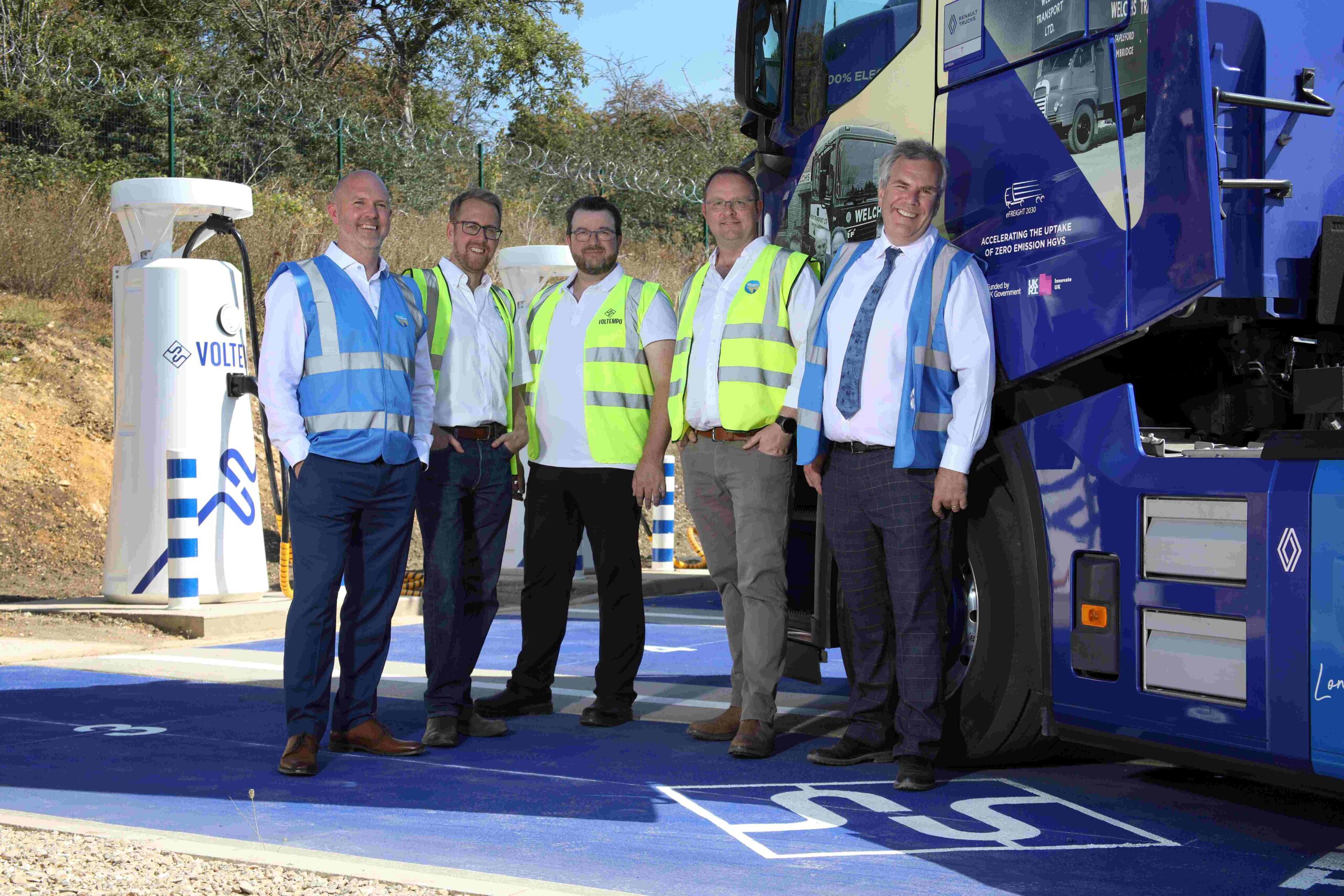
e-FREIGHT 2030 powers up with first electric HGV on the road​

eFREIGHT 2030 has accelerated the shift to greener transport with the delivery of its first electric heavy goods vehicle (eHGV). This key milestone is part of the UK Government’s Zero Emission HGV and Infrastructure Demonstrator (ZEHID) Programme, which aims to transform the future of road transportation. 

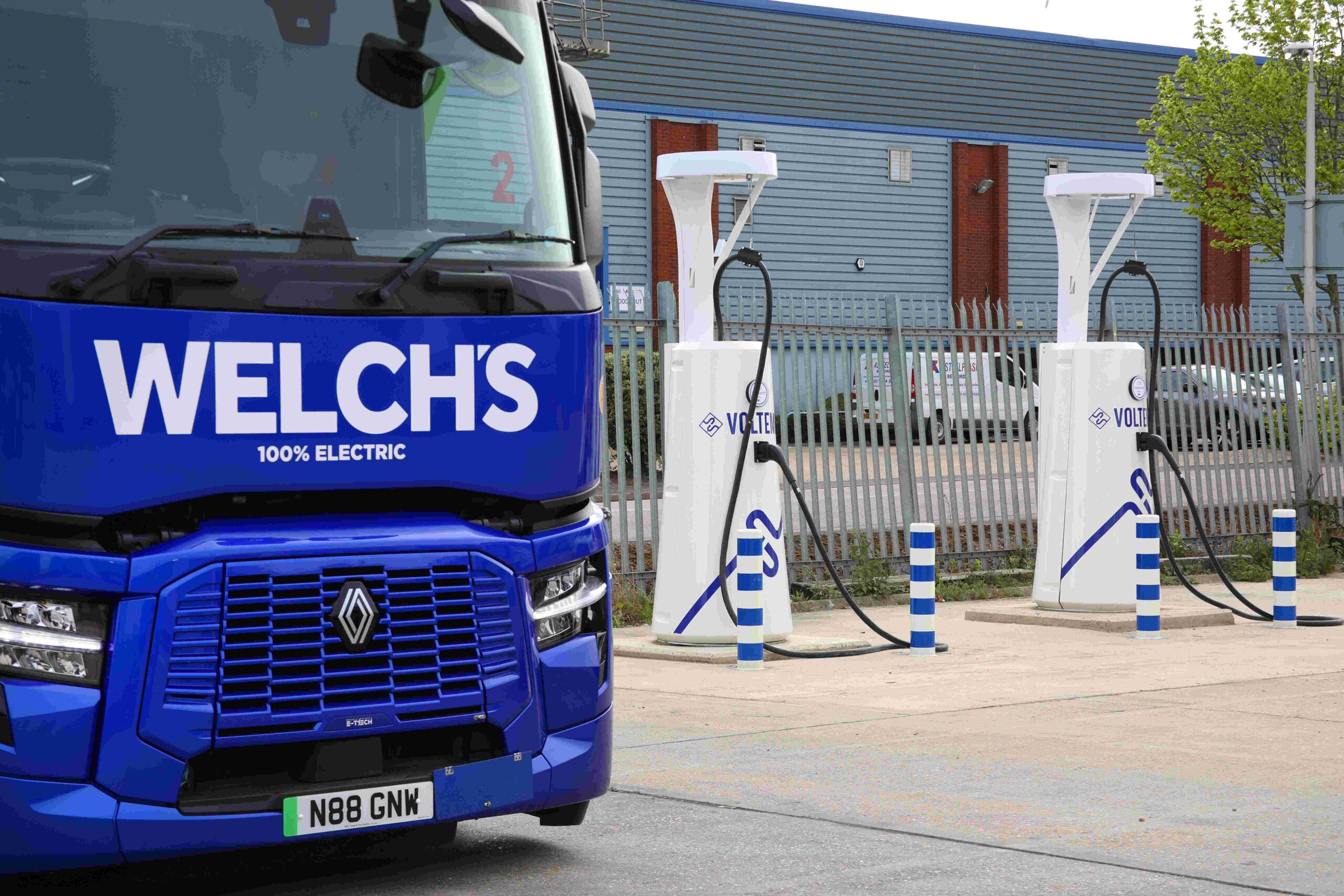
The 42-tonne Renault Trucks E-Tech T 4×2 has been delivered to Welch’s Transport, the Cambridgeshire-based freight, haulage and logistics business where it will operate out of their flagship site in Duxford, Cambridgeshire on regional distribution and long-haul deliveries.  

The arrival of the E-Tech also marks the first deployment of Renault Trucks’ heavy duty regional distribution model in customer operations in the UK.

Welch’s Transport and Renault Trucks are among the fourteen founding members of the eFREIGHT 2030 consortium, part of the ZEHID Programme funded by the Department for Transport and delivered in partnership with Innovate UK, which is introducing 100 eHGV tractor units and 32 new charging locations over a multi-year real world evaluation of electric HGVs that will shape the future of zero emission transport.  

Future of Roads Minister Lilian Greenwood said: “Our roads are undergoing a technological revolution, and I’m delighted that e-FREIGHT 2030, Renault Trucks and Welch’s Transport are coming along on the journey. 

 “A greener transport network is a key priority for this Government, which is why our demonstrator programme aims to scale up zero emission HGVs and install the right infrastructure to decarbonise road freight. This is an excellent example of industry and government collaborating to reach net zero.”

Family business, Welch’s Transport, brings 90 years of experience as a leading logistics provider in the East of England, with 160 staff and a fleet of 80 vehicles which comprises a mix of electric, diesel, and specialist HGVs. The introduction of the first Renault Trucks E-Tech T, which will be joined by a second early next year, marks a major step in the company’s commitment to innovation and sustainability. This follows Welch’s 2023 investment in a 19-tonne Renault Trucks E-Tech D Wide for Cambridge’s first Net Zero delivery service and the installation of the UK’s first publicly accessible 150kW supercharger at its Duxford site, where the new eHGVs will be charged. 

With zero tailpipe emissions, the E-Tech T is powered by six 90 kWh batteries and three electric motors, delivering up to 490kW continuous power and maximum torque of 2400Nm, coupled to Renault Trucks’ Optidriver AT 2412 12 speed automated gearbox. 

The E-Tech T will handle general haulage and pallet distribution, supporting Welch’s Transport’s commitment to zero-emission deliveries in and around Greater Cambridge and beyond. 

Michael Boxwell, Group CEO of Voltempo, which heads up the eFREIGHT 2030 consortium, said: “It’s fantastic to see the first electric HGVs on the road with Welch’s Transport as part of the eFREIGHT 2030 project, which combines the operational and technical expertise necessary to decarbonise road freight transport from the largest fleets to SMEsWe’re eager to start gaining insights into the real-world performance of eHGVs to demonstrate how they can replace conventional HGVs at scale.” 

Chris Welch, Managing Director of The Welch Group said: “We’re incredibly proud to be at the forefront of this landmark shift towards decarbonising road freight. The introduction of our first fully electric 42-tonne HGV is not just a step forward for the Group, but a crucial milestone for the industry. This vehicle demonstrates how innovation, sustainability, and operational efficiency can go hand in hand as we work to make zero-emission freight a reality. We are committed to pushing the boundaries of what’s possible within the SME environment and leading the way in sustainable logistics for the UK. 

Carlos Rodrigues, Managing Director of Renault Trucks UK & Ireland said: “We’re delighted to see the first E-Tech T on the road with Welch’s Transport and look forward to many more joining eFREIGHT 2030 member fleets in the coming months. With over 100 Renault Trucks battery electric vehicles already operating in the UK, our dealer network—backed by four years of investment and development—is fully prepared to support operators as the industry accelerates this vital transition.” 

Press Release 30th May 2024

eFREIGHT 2030 consortium announces founding members to shape the future of zero emissions HGVs

The eFREIGHT 2030 consortium, part of the UK Government’s Zero Emission HGV and Infrastructure Demonstrator Programme funded by the Department for Transport in partnership with Innovate UK, today announced the founding members of the consortium that will shape the future of zero emission HGVs

Consortium members include fleet operators Expect Distribution, Kuehne+Nagel, Maritime Transport, Menzies Distribution, Welch’s Transport and Wincanton; retailer Marks & Spencer; vehicle manufacturers DAF Trucks, Renault Trucks and Scania; software provider Dynamon, charge point manufacturer and eFREIGHT 2030 project lead, Voltempo Group; charging hub owner and operator, Fleete Group, and Data and research partner, Energy Systems Catapult.

Chairman of the eFREIGHT 2030 consortium and former Secretary of State for Business, Innovation and Skills, Sir Vince Cable said, “We are delighted to announce the line-up of the eFREIGHT2030 founding members. Each member has a longstanding history and experience in transport and logistics and is contributing significantly to the consortium’s shared vision to demonstrate how eHGVs can replace conventional HGVs at scale using British technology.

“The bringing together of so much operational and technical experience within the eFREIGHT 2030 consortium offers a unique opportunity to decarbonise the road freight transport sector in the coming months and years. We look forward to sharing many specific examples as the programme advances.”

Over a multi-year demonstration, the eFREIGHT 2030 consortium is introducing 100 of the latest HGV tractor units and 32 new charging locations. In addition to the consortium fleets, eFREIGHT 2030 aims to reach out to the wider industry and has reserved a number of vehicles for shorter term use by associate members of the consortium. This will enable smaller operators to evaluate the capabilities of electric trucks on a short-term basis along with appropriate interim charging solutions, derisking confidence building activities before making decisions about permanent fleet replacement. 

Berkeley Coachworks Ltd is announced as a supplier to the consortium, demonstrating eFREIGHT 2030’s commitment to championing British innovation and technology in delivering zero emission HGVs. By providing a trailer-located energy source, their Bulldog range extender e-trailer technology addresses another challenge for the transport sector, and Berkeley’s plans include the first known use of British-built battery cells in the HGV supply chain.

By undertaking a genuine, real-world evaluation of the technical and commercial viability of electric trucks, eFREIGHT 2030 aims to prove the business cases for eHGVs and a publicly accessible network of 1MW eHGV charging hubs across the country.  A key part of this will be to stretch boundaries by focusing on demanding use cases, including long-range, multi-shift and power take-off, using Dynamon’s Zero software modelling to match the developing technologies to the operational challenges.   

Transparency and communication are central pillars and objectives for the consortium, with regular publicly announced updates scheduled throughout the project. 

Commenting on progress to date, Michael Boxwell, Group CEO of Voltempo, which heads up the eFREIGHT 2030 consortium, said, “I am delighted to report that we are on target for our very ambitious decarbonisation targets – we have placed the first vehicle orders for consortium members across the three vehicle manufacturers, the development of the Voltempo Hypercharger Pod continues at pace, and we have undertaken energy assessments for multiple sites to build a roadmap for the roll-out of the eFREIGHT 2030 charging locations. 

As an industry, the progress we are making is remarkable, and it is clear that working collaboratively will be key to accelerate our journey to zero emission HGVs.” 

Work on the eFREIGHT 2030 project will begin in early 2024 and take seven years to complete.