Tarmac and TVS Interfleet join eFREIGHT 2030 consortium

New members to demonstrate electric vehicles in challenging use cases

eFREIGHT 2030, part of the UK Government’s Zero Emission HGV and Infrastructure Demonstrator Programme (ZEHID), has announced Tarmac and TVS Interfleet (TVS) as the latest members of its consortium, which aims to shape the future of zero emission HGVs.   

Tarmac and TVS join the fourteen founding members of the eFREIGHT 2030 consortium, part of the ZEHID Programme funded by the Department for Transport and delivered in partnership with Innovate UK. The eFREIGHT 2030 project is introducing 100 electric HGV tractor units and 32 new charging locations over a multi-year real world evaluation that will pave the way for zero emission transport.   

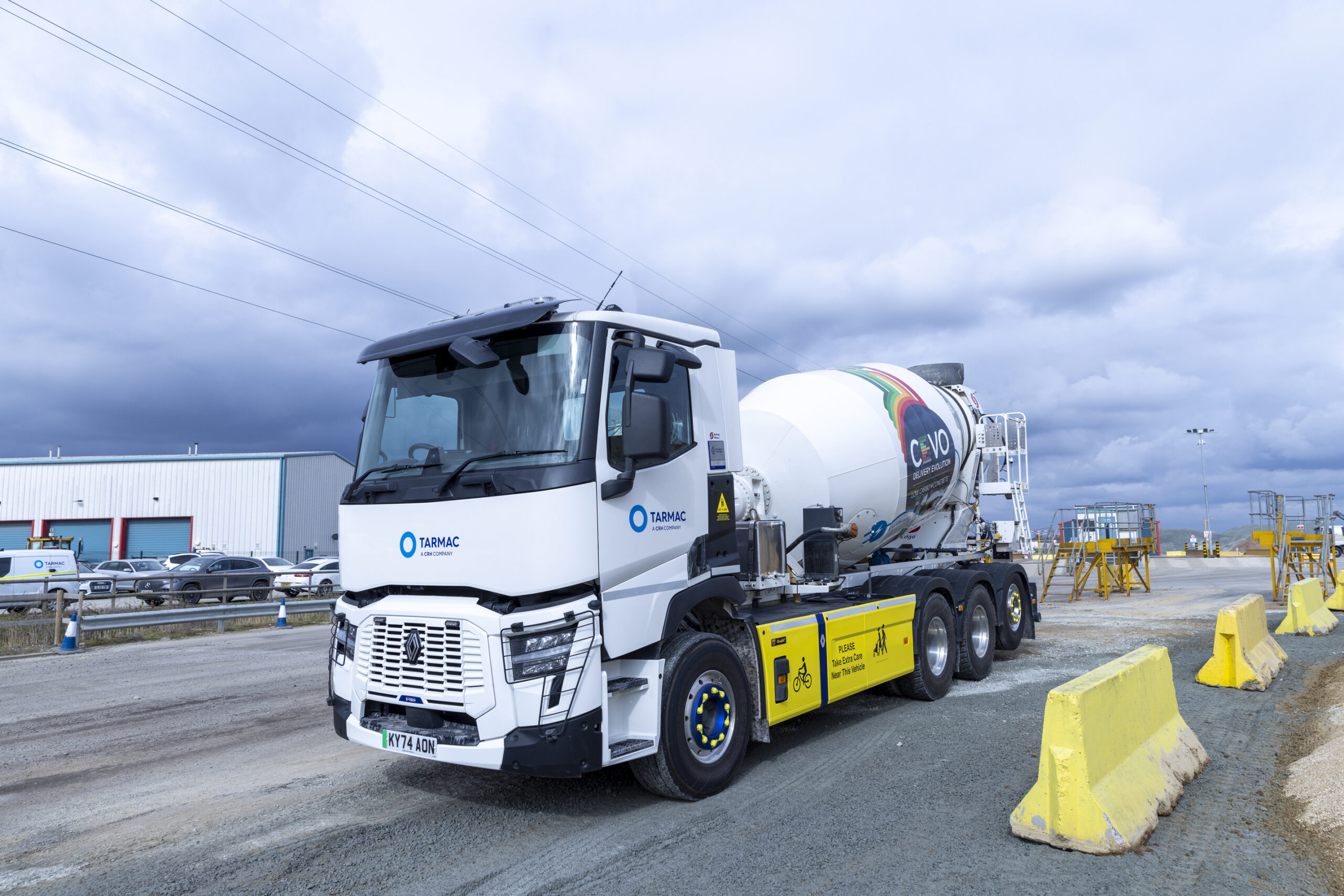
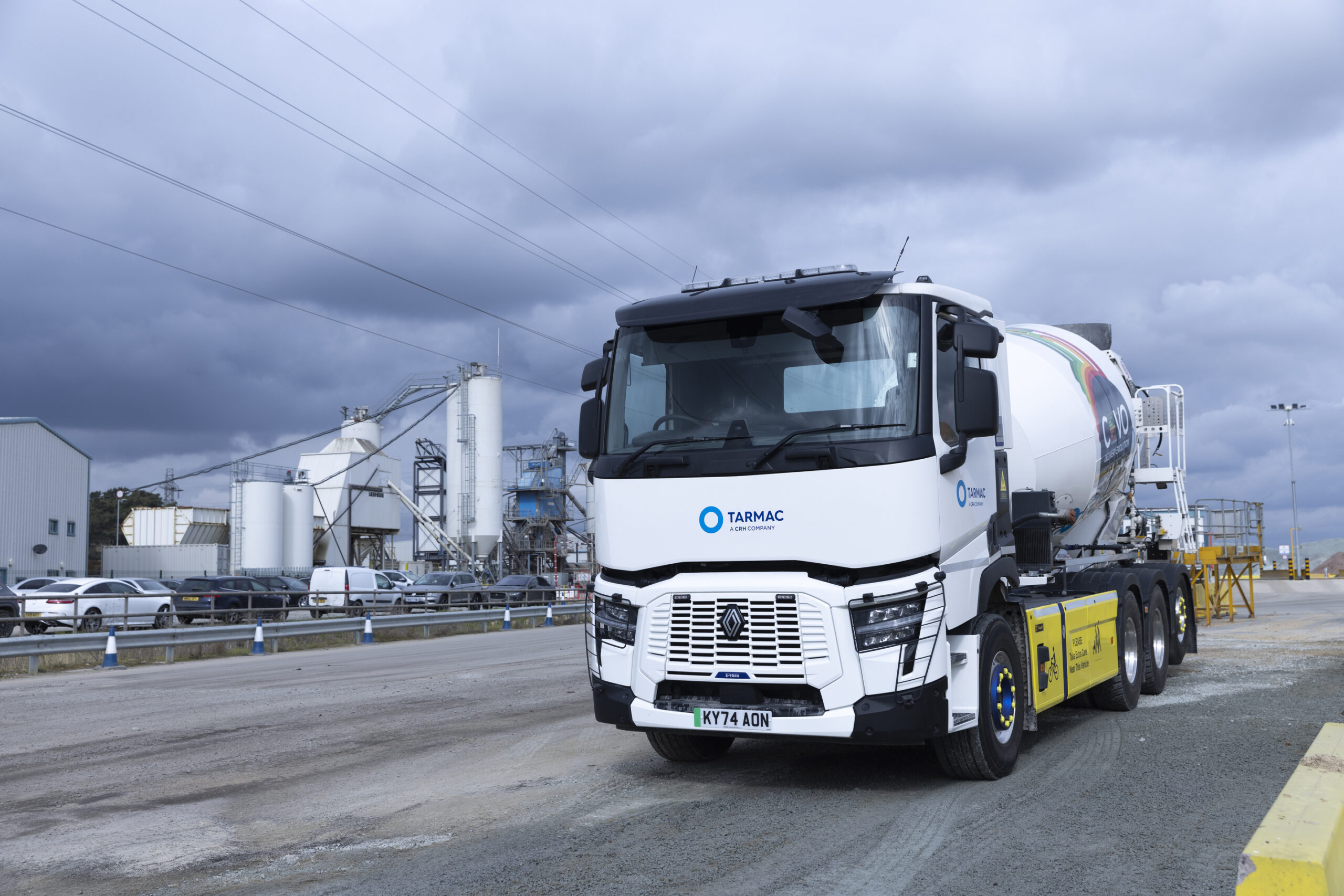
As part of eFREIGHT 2030, Tarmac will add five eHGVs equipped with a range of trailers to supply its cement, aggregate, asphalt and plant movements.  With zero tailpipe emissions, the eHGVs align with Tarmac’s strategy to develop integrated low-carbon logistics solutions and will demonstrate how electric vehicles can work in more challenging use cases such as construction.  Additionally, Tarmac is developing a fast-charging network around the London area which will enable truck range to be increased, match the duty cycle of its existing fleet and accelerate the decarbonisation of material deliveries to customers.
TVS Interfleet company Wilcox Commercial Vehicles will supply one of the trailers for aggregate and asphalt movements, and this will be equipped with a new Tipper Active Safety System (TASS) with passive and active safety controls to increase the safety of the trailer during its tipping operations. 

The eHGVs, four Renault Trucks and one DAF, will join Tarmac’s pioneering eDiscovery Programme, which allows supply chain partners to lease an electric truck for a six month period, enabling them to evaluate the vehicle’s performance in their operation before committing to a long-term investment.  

Ben Garner, Head of Logistics at Tarmac, said; “We are delighted to join the eFREIGHT 2030 consortium, reiterating our commitment to our sustainability goals and reducing emissions across our logistics network. At Tarmac, we are focused on delivering innovative, low-carbon solutions that support our transition to net-zero, and our partnership with TVS Interfleet and our OEM partners enables us to continue our drive toward decarbonising the construction sector. By bringing eHGVs into these demanding aspects of Tarmac’s operations and working with like-minded partners through eFREIGHT 2030, it further strengthens our ability to create a greener construction supply chain.” 
Andrew Scott, Product Director at TVS Interfleet, commented: “Joining eFREIGHT 2030 enables us to extend the partnership with Tarmac which saw us develop the UK’s first electric concrete mixer. As with that initiative, where we were able to develop enhanced safety systems for a familiar construction vehicle, we look forward to doing the same for the Wilcox tipping trailer. We look forward to working again with Tarmac to demonstrate a more sustainable future for the construction industry.” 
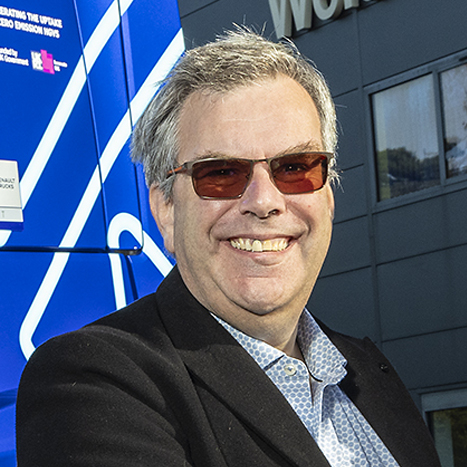
Michael Boxwell, Group Chief Executive Officer at Voltempo Limited which leads the eFREIGHT 2030 consortium, added: “We are delighted to welcome Tarmac and TVS Interfleet to the eFREIGHT 2030 consortium. The addition of electric construction vehicles to the ZEHID programme, including their deployment at several of Tarmac’s Greater London sites, is an exciting milestone. With TVS Interfleet, Tarmac continue to lead the decarbonisation of the construction sector and we are delighted to bring their innovation and ambition into the ZEHID programme and to further extend the reach of eHGVs into the most demanding transport sectors.”  

Dr Isabella Panovic, Programme Manager – Zero Emission Road Freight, Innovate UK, said: “eFREIGHT 2030 is a transformative project that is paving the way for zero-emission freight transport in the UK. The addition of Tarmac and TVS Interfleet to the consortium brings valuable expertise in construction logistics and vehicle innovation, further strengthening our ability to demonstrate the real-world viability of electric HGVs. Innovate UK is proud to support this initiative, which will accelerate the transition to sustainable, low-carbon freight and contribute to the UK’s net zero ambitions.” 

Building the Future: eFREIGHT 2030 highlights progress at ZEHID Summit

Building the Future: eFREIGHT 2030 highlights progress at ZEHID Summit

The recent Zero Emission HGV and Infrastructure Demonstrator (ZEHID) Progress Summit, held on 6 March 2025, provided the perfect platform for eFREIGHT 2030 to showcase the results so far and share our future plans for zero-emission freight transportation. The event also gave the other ZEHID consortia an opportunity to present their own progress updates, highlighting the diverse approaches being taken across the UK to decarbonise the freight sector. 

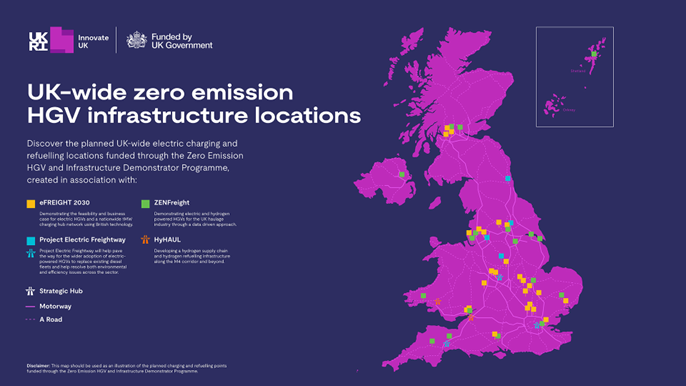
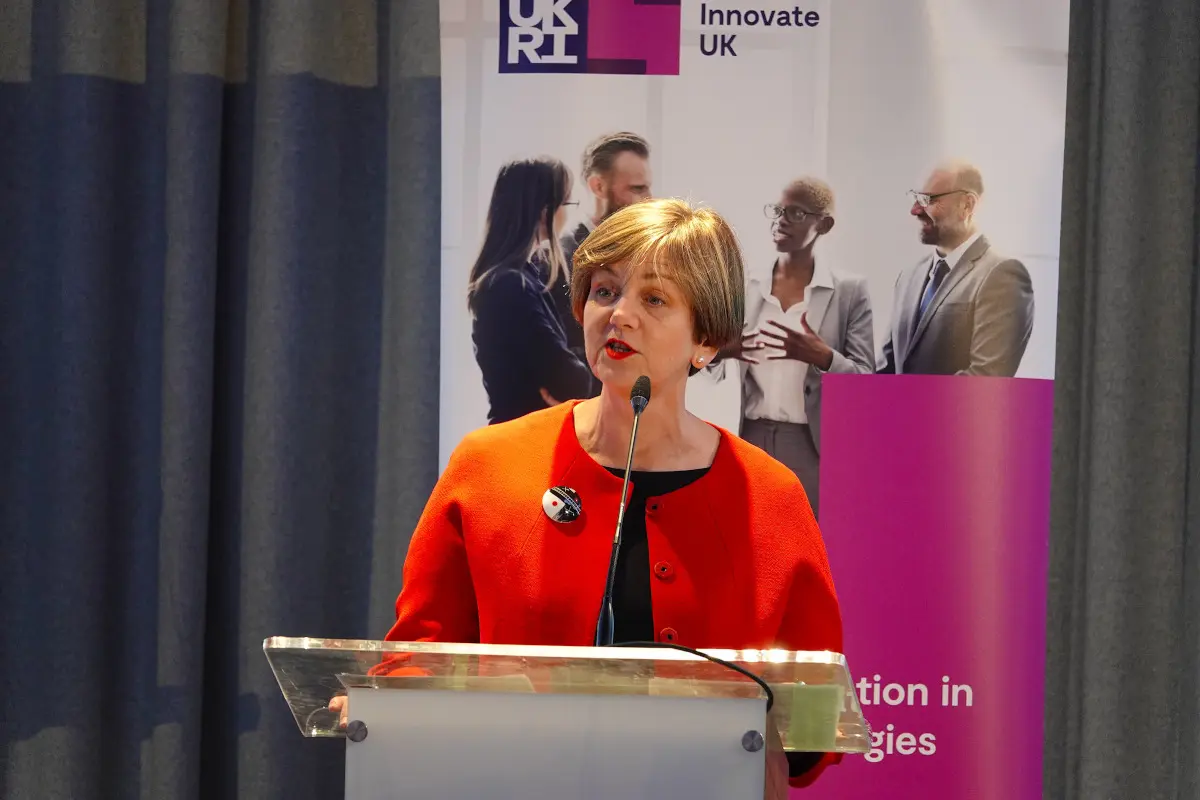
Hosted by the Department for Transport in collaboration with Innovate UK, the Summit featured a keynote address from Lilian Greenwood MP, Minister for Future of Roads, who unveiled plans for over 54 new zero-emission HGV infrastructure hubs across the UK—a critical development in accelerating the adoption of green transport solutions. 

“I’m pleased to unveil the map of 54 planned infrastructure locations funded through this programme,” announced Minister Greenwood. “This isn’t just a handful of sites. It’s a nationwide network, from Scotland to the south coast, from city hubs and depots to motorway service areas. We’re ensuring that zero-emission freight isn’t just possible, it’s practical, and practicality is the key for operators.” 

The Minister emphasised that the transition to zero-emission HGVs is not merely about meeting climate targets but ensuring Britain’s freight industry remains “competitive, resilient and ready for the future”. 

Photo: The new map of planned infrastructure locations unveiled at the ZEHID Progress Summit


eFREIGHT 2030: Achievements to date 

Michael Boxwell, CEO of Voltempo and lead of the eFREIGHT 2030 consortium, presented some of the key milestones already achieved by the consortium partners and members to date, which included: 

  • Successfully securing £76 million in funding, including £49.2 million from the Department for Transport 
  • Deploying the first wave of zero-emission trucks with major operators including Marks and Spencer, Kuehne+Nagel, and Welch’s Transport using Renault vehicles 
  • Established operational charging installations at Marks and Spencer sites operated by DHL and at East Midlands Gateway 
  • Worked with the DVSA to secure official confirmation that drivers can charge electric HGVs during break periods, resolving a longstanding regulatory uncertainty 
  • Expanded the consortium with recent additions including smaller haulage company I.J. McGills and construction materials giant Tarmac 

“It’s great to see the impetus growing and a lot more interest from industry on decarbonisation,” noted Michael during his presentation. “What’s been transformed in the last few years has been incredible. A lot of that has actually been down to the ZEHID programme, because that was what really kick-started it.” 

Current infrastructure development 

Michael also highlighted the consortium’s infrastructure rollout is progressing rapidly: 

  • Approximately 33 sites are currently under development 
  • 30 sites will feature megawatt charging capabilities from day one 
  • Most sites will include six or more charging bays, with some locations offering up to 12 bays 
  • All sites are scheduled to be operational by January 2026 
  • The network will provide a total of 230-240 charging bays to support 100 trucks, creating surplus capacity for future expansion 

“We’re trying to get the infrastructure in place first so that operators can have the confidence to make the transition and invest in electric trucks.” 

A distinctive feature of the eFREIGHT 2030 approach is its focus on collaborative infrastructure. “The great thing with fleet operators is that logistics is all about solving problems; as an industry that’s what we’re really good at,” Michael highlighted. “We genuinely have competitors working together, seeing how they can do things for the greater good, but also to benefit themselves.” 

Megawatt charging innovation 

The consortium is implementing megawatt-level charging capabilities from the beginning, rather than installing lower-capacity chargers that would soon become obsolete. 

“What’s the point of putting in chargers at 350 kilowatts or 250 kilowatts now, when we already know that we’re going to need megawatt charging in three to five years’ time?” Michael explained. “The megawatt charging will allow the trucks to be charged during a 45-minute break. That means you can double-shift them so much easier, and it gives a lot more flexibility.” 

Open to new participants 

A central theme of the summit was the importance of collaboration across the industry, with Michael highlighting that “collaboration is at the heart of consortium success”. 

On that note, he emphasised that the eFREIGHT 2030 consortium remains open to new fleet operators: “If you’re a fleet operator and you think you’ve missed the boat, you really haven’t. You can get involved. You can get access to trucks and infrastructure, come and talk to us about it.” 

The ZEHID Progress Summit highlighted the remarkable progress being made in the UK’s transition to zero-emission freight. With eFREIGHT 2030 leading the charge through innovative technology, collaborative approaches, and forward-thinking initiatives, the future of sustainable freight in the UK looks increasingly promising. 

As Minister Greenwood summarised: “The businesses that move first won’t just keep up. They’ll get ahead.”  


Photo: Lilian Greenwood, Minister for the Future of Roads.

For more information about joining the eFREIGHT 2030 consortium click here.

A strong start to the year in first eFREIGHT 2030 QRM of 2025

A strong start to the year in first eFREIGHT 2030 QRM of 2025

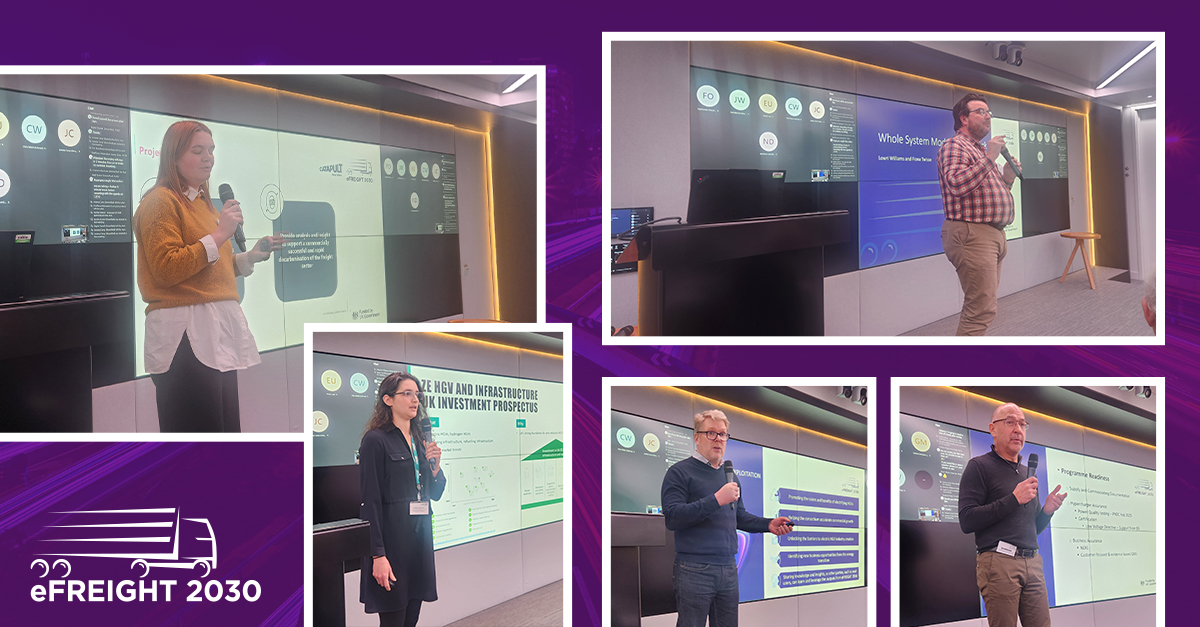
Our first Quarterly Review Meeting of 2025 marked a strong start to the year as eFREIGHT 2030 partners and consortium members gathered to reflect on project updates and reaffirm our shared commitment to decarbonising road freight before 2030.

Held at the Connected Places Catapult headquarters in
Clerkenwell, the meeting celebrated the progress made so far and further
underscored the value of collaboration across the logistics industry, research,
and government.

Sir Vince Cable, chairman of eFREIGHT 2030, opened the session before the consortium reflected on key achievements of the project so far, explored solutions to current issues, and aligned on next steps. Workshops, insights and updates looked ahead to future milestones that will push the project closer to success.

Hosted by Connected Places Catapult at their headquarters in Clerkenwell, the event fostered collaboration, driving further progress towards objectives to accelerate the EV revolution and deployment of charging infrastructure.

eFREIGHT 2030 is shaping the road to decarbonised road freight with its shared vision of creating a widescale switch from diesel to electric power across the industry by 2030 and entirely electrifying the sector by 2035. The dedication and commitment of our partners and consortium members ensures that we will drive important change and build a more sustainable future for logistics.

Together, we continue to make meaningful progress!

M&S Rolls out Five All-Electric HGVs

M&S Rolls out Five All-Electric HGVs

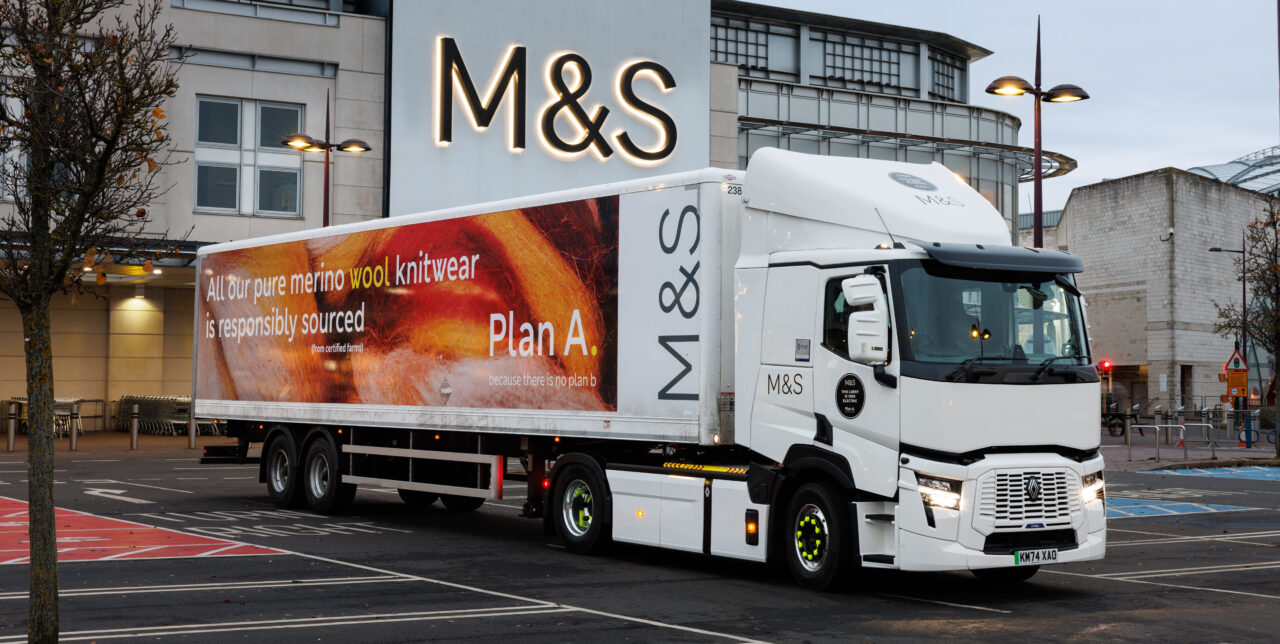

Marks & Spencer (M&S), a founding member of eFREIGHT 2030, has introduced five zero-emission battery-electric HGVs as part of an 85-strong addition of zero or lower emissions vehicles to its supply chain logistics fleet.


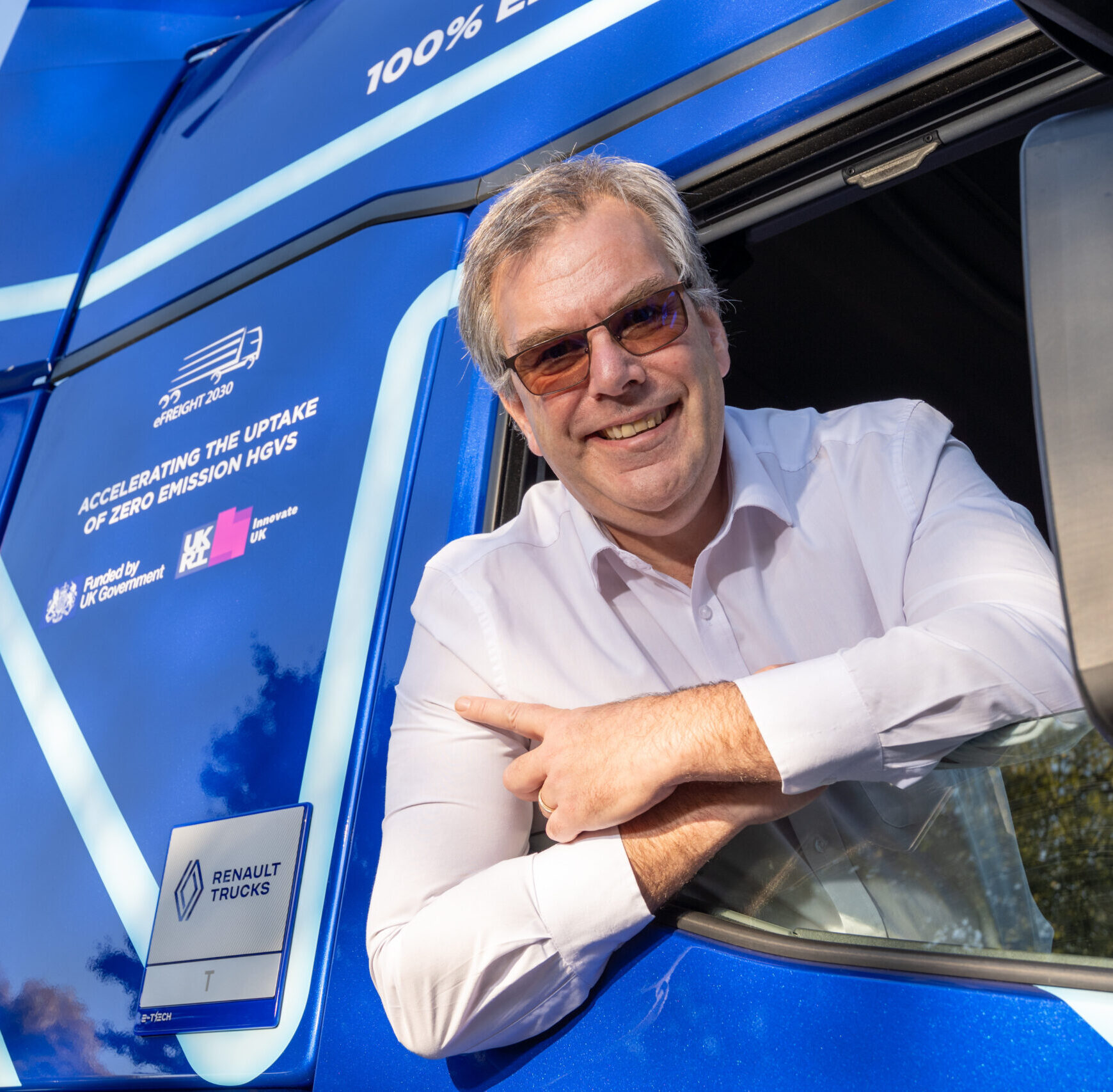
The five 42-tonne Renault Truck E-Tech Ts, delivered under the eFREIGHT 2030 project, are part of the UK Government’s Zero Emission HGV and Infrastructure Demonstrator (ZEHID) programme, aimed at decarbonising road freight transport by accelerating the adoption of zero-emission heavy goods vehicles and their charging infrastructure. These new electric trucks will replace equivalent diesel vehicles, operating between M&S’ Clothing & Home distribution centre in Welham Green and 30 stores across London and the Southeast.

This fleet expansion, which includes both zero and lower-emission vehicles, marks a significant step in M&S’ Plan A roadmap to reach Net Zero by 2040, demonstrating its commitment to adopting cleaner fuels and advanced technologies.

The new fleet of vehicles will be operating between M&S’ Clothing & Home distribution centre in Welham Green and 30 stores across London and the Southeast, directly replacing equivalent diesel trucks. This shift is a significant step for M&S towards achieving its Plan A roadmap to reach Net Zero by 2040 which is committed to increasing the use of new technologies and cleaner fuels.


Commenting on the announcement, Julian Bailey, Head of Group Transport at M&S, said: “Adapting our logistics network is vital in achieving our Plan A Net Zero ambitions. We’re committed to reducing carbon emissions from our transport and through collaboration we are able to reduce carbon, save energy, and drive operational efficiencies across the business. By trialling new vehicle technologies, we’re able to deliver our products, which are sourced and made with care, to our depots and stores with a lower impact on our planet.” 

As one of the founding members of the eFREIGHT 2030 project, M&S will gain valuable insights into the performance of battery electric HGVs to demonstrate how they can replace conventional HGVs, informing future decision making around the addition of zero & lower emissions vehicles in major supply chains.


Lilian Greenwood, Future of Roads Minister, said: “We’re working with business to lead the charge towards innovative zero emission vehicles. That’s why it’s fantastic to see M&S add five zero emission electric lorries to their fleet thanks to our £200 million to roll out large zero emission trucks – the biggest investment of this kind in the world. This comes on top of our £2.3 billion boost to help industry and consumers switch to electric vehicles, harnessing the transition to net zero by supporting jobs, attracting investment and making Britain a clean energy superpower.” 

Michael Boxwell, Group Chief Executive Officer at Voltempo Limited which leads the eFREIGHT 2030 consortium, added: “We are delighted to see M&S incorporating five zero-emission, battery-electric 42-tonne Renault Trucks into its supply chain, including their deployment to iconic shopping destinations such as Oxford Street and Bluewater, as part of the eFREIGHT 2030 project. We are delighted to be supporting M&S’s decarbonisation programme, with Voltempo providing charging infrastructure and project support as part of the programme.

“Fleet transitions require time and planning, and it’s inspiring to see innovative companies like M&S implementing their plans to support their sustainability goals, taking significant positive action towards net zero. Electric Heavy Goods Vehicles play a key role in decarbonisation, and it is good to see M&S take a leading position within the sector.”